
Fast Food & Grill · Practical guide
551 HORAI
Osaka's Legendary Pork Buns, Hand-Wrapped & Steamed Fresh
Prices, ordering steps, payment details, and common mistakes — in one place.
Quick Facts
Last checked against official information: 2026-11-13.
| Feature | Details |
|---|---|
| Japanese name | 551蓬莱 (551 HORAI) |
| Category | Food / Osaka Soul Food, Chinese Dim Sum (Butaman Pork Buns, Shumai, Gyoza), Takeout Counters & Chinese Restaurants (551 HORAI Official Website) |
| Store Count | About 60 shops, all in the Kansai region — Osaka, Kyoto, Hyogo, Nara, Shiga and Wakayama prefectures; there are deliberately no shops in Tokyo or elsewhere in Japan. Most are takeout counters in stations, airports and department stores; a small number add sit-down Chinese restaurants or eat-in counters, led by the Namba Honten (flagship) in Osaka (counted from the official shop listings on 551horai.co.jp, checked 11 November 2026) |
| Ordering Style | Queue at the counter, state the item and quantity, pay and receive your food on the spot; at restaurant locations, order at your table and pay at the register afterwards |
| Membership Required? | No membership, no reservation and no ID required — just join the line |
| Approximate Price Range | Current takeout examples: pork buns ¥500 for two or ¥1,000 for four; shumai ¥950 for ten; gyoza ¥440 for ten; chilled pork buns ¥1,080 for four. Dine-in and mail-order prices differ; check the current shop menu. |
| Payment Methods | Payment methods vary by shop and host facility. Check the specific counter’s current information rather than assuming a particular credit card, IC card or QR wallet is accepted everywhere. |
| Multilingual Support | Picture menu boards with a short, numbered menu make ordering by pointing easy; station and airport shops serve large numbers of international visitors every day |
What it is
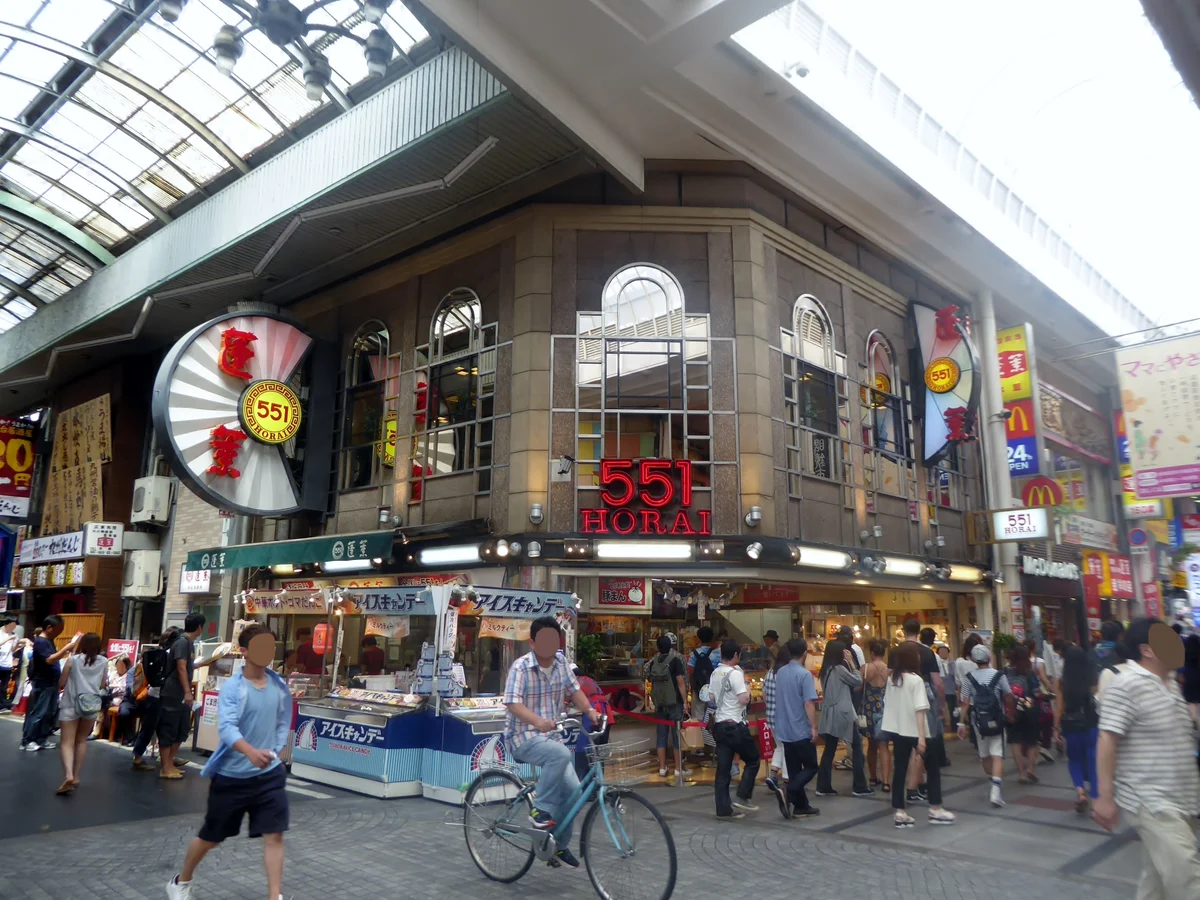
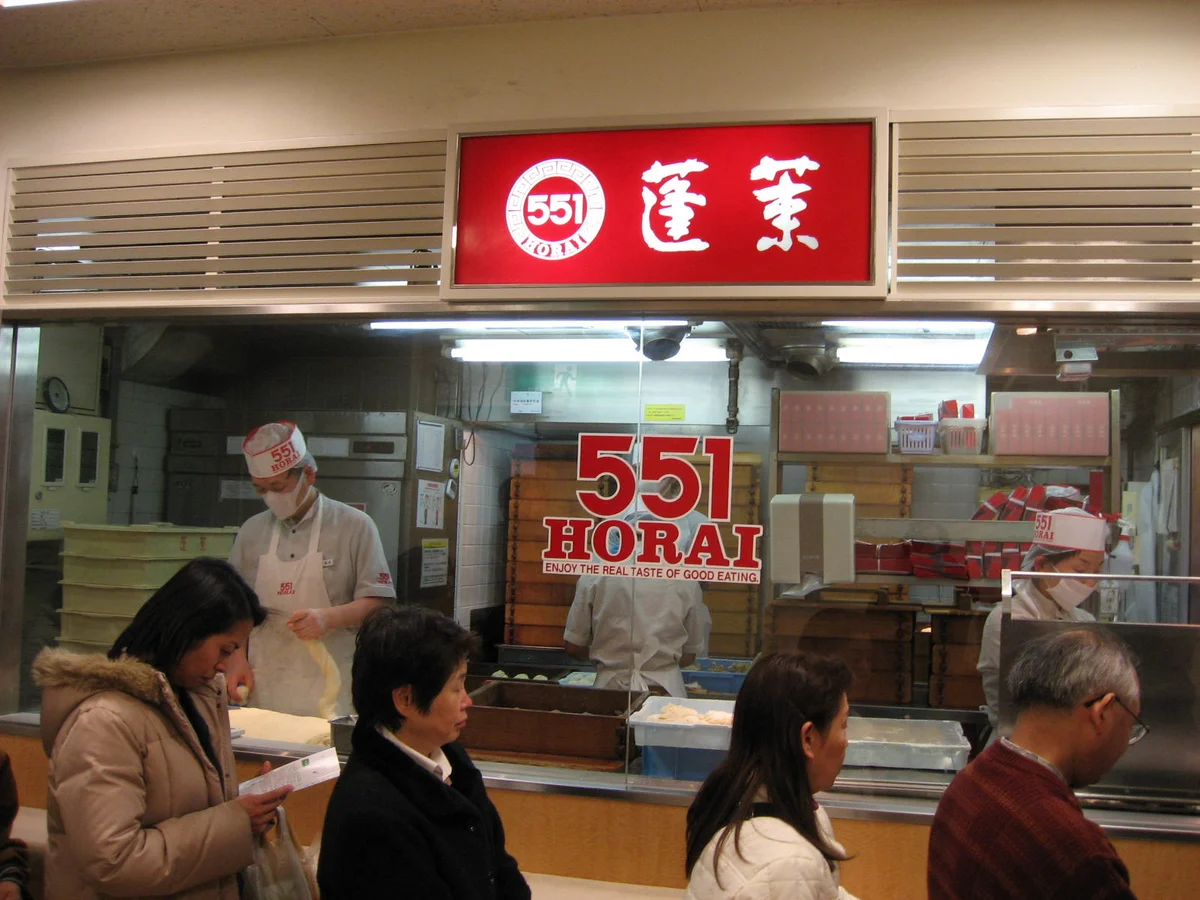
551 HORAI (551蓬莱, read "go-go-ichi Horai"), founded in Osaka's Namba district in 1945 and run by HORAI Co., Ltd., is the definitive soul food of Osaka and the Kansai region. It began as a small Chinese restaurant, and its signature product — the butaman (豚まん), a plump steamed pork bun created the year after the company was founded — took over the business. It is still, in the company's own words, hand-wrapped one by one: dough and filling arrive from the company's Osaka kitchen, and at every shop the staff pinch each bun shut by hand in an open kitchen and send tray after tray into the steamers in full view of the queue. Pork and onion are the main filling ingredients, inside a slightly sweet dough. The published ingredient list also includes seasonings and other ingredients, including wheat and soy; check the product’s current allergen information if you have dietary restrictions. The same kitchens turn out juicy shumai (焼売), shrimp shumai, pan-fried gyoza and sweet-and-sour meatballs, with product-specific storage conditions and use-by dates. Add the famous Kansai TV-commercial jingle — "551 ga aru toki~!" ("when there's 551!"), beloved enough that the official site runs a whole feature section under that name — and you have a brand that is less a restaurant chain than a piece of regional identity. Because freshness is the whole point, 551 HORAI refuses to expand beyond the Kansai area its Osaka kitchens can supply: shops are clustered in Osaka city and strung along the rail lines of Kyoto, Hyogo, Nara, Shiga and Wakayama, and there is no Tokyo branch. For Kansai locals, the red-and-white box is the souvenir to bring home from a trip to Osaka — and the box everyone else on the train will be eyeing enviously.
How to order
- Pick Your Shop Format (Takeout Counter vs. Restaurant):
- Takeout counters (the great majority): Inside major stations (Shin-Osaka, Osaka, Kyoto, Namba), both Osaka airports (Itami and Kansai International) and department-store food floors. This is where almost everyone buys.
- Restaurants & eat-in counters: Selected shops offer table-service restaurants or eat-in counters, including Honten and other locations listed in the official shop search. Dining hours and bento availability vary: for example, Honten lists restaurant service and bento from 11:00, whereas Daimaru Shinsaibashi lists eat-in and bento from 10:00. Check the specific shop before planning a meal.
- Queue and Order by Number:
- Join the line — at busy station shops the queue is a landmark in itself, but it moves fast because the menu is short and everything is steamed in constant rotation.
- At the counter, simply state the item and box size: pork buns come in boxes of 2, 4, 6 or 10. Pointing at the menu board works fine.
- Decide hot or chilled before you reach the front (see the souvenir strategy below) — this is the one choice that matters.
- At a restaurant, the flow flips: sit down, order dim sum and dishes from the table menu, eat at leisure, then pay at the register on your way out.
- Pay and Eat (or Carry):
- Pay at the same counter; hot food is handed over immediately in the iconic paper bag or box.
- Hot buns are at their best within the hour. If you are eating on the Shinkansen, buy just before boarding — the Shin-Osaka station shops open from 9:00 for exactly this ritual.
What to order first
- Butaman Pork Buns (豚まん): A roughly 130 g bun with a pork-and-onion-based filling. The current takeout menu lists two for ¥500 and four for ¥1,000; dine-in and mail-order prices differ.
- Shumai (焼売): The number-two classic, made from a similar pork-and-onion mix with barely any binder, so the texture is soft and almost fluffy. Boxes of 6 (¥570) or 10 (¥950).
- Chilled Butaman for Travel (チルド豚まん): Rapidly chilled versions of the same buns, sold only at selected station, airport and service-area shops; they keep for 5 days including the day of production when refrigerated below 10°C, and re-steam or microwave back to near-fresh. This is the correct souvenir format — 4 for ¥1,080.
- Pan-Fried Gyoza (焼餃子) & Sweet-and-Sour Meatballs (甘酢団子): The takeout menu lists gyoza at ten for ¥440 or fifteen for ¥660, and meatballs at ten for ¥460. Meatballs are not sold at every shop; several major station and airport counters are excluded on the official product page.
- Restaurant meals and limited buns: Restaurant menus and prices vary by location; check the current menu for the branch you choose. The official takeout menu lists char siu buns at two for ¥570 at Honten and Umeda Hanshin from 11:00, and red-bean buns at two for ¥530 at Honten from 10:00; online and eat-in prices can differ.
Payment & practical info
- Payment Accepted: Check the payment methods listed by your specific shop or host department store. Do not assume that every counter accepts the same card, transit IC or QR brand.
- Hours: Hours differ by shop and format. The Namba Honten lists its takeout counter as 10:00–21:30 and restaurant last orders at 21:30. Regular closures and holiday exceptions are shown on the official shop page; check the dated notice before visiting rather than assuming an unchanging weekday pattern.
- Tax-Free Status: Restaurant meals and buns eaten in Japan are not eligible for tax-free shopping. An official tax-free offer for 551 HORAI was not confirmed from current official information; do not budget for a refund. Food is not excluded solely because it is food: export purchases require an authorised participating store and compliance with destination import rules.
- Freshness Rules: Follow the purchased item’s label. The official FAQ gives hot pork buns a same-day limit at room temperature, or three days including production if refrigerated at 10°C or below immediately after taking them home; some shops still label them for the same day. Chilled buns have five days including production under refrigeration. The company does not sell frozen pork buns.
- Online Shop: The official online shop ships chilled pork buns, shumai and gift sets by refrigerated delivery within Japan only (delivery to a Japanese address or hotel; no international shipping). Some shops also take mail-order requests at the counter.
Good to know / Common mistakes
- Hot vs. Chilled — plan storage first: For a long journey, choose a shop that stocks chilled buns and arrange continuous refrigeration. The five-day period includes the production day and assumes proper chilled storage; it is not five days in a travel bag. For hot purchases, follow the specific label and the official storage instructions.
- The Even-Number Rule: Butaman are sold in even numbers — 2, 4, 6 — as a rule. It goes back to the founder: even numbers were considered auspicious, a sign of harmony, and the shops have kept the custom since the earliest days. If you want an odd number, just ask the staff — they will sell singles in a one-bun box.
- The Handmade Point: Regular hot pork buns are hand-wrapped in shops. Chilled and mail-order buns are also hand-made, at the company’s central kitchen. Shops are directly operated; the company does not sell frozen pork buns.
- The Shin-Osaka Smell — plan around the aroma: Fresh 551 buns perfume an entire train carriage; locals consider it part of the fun, but the smell is strong. Eat soon after boarding, keep the box closed until then, and never leave hot buns sealed in a suitcase — they sweat, go soggy and scent everything.
- Shin-Osaka Queue Strategy: The station has several 551 shops at once — inside and outside the Shinkansen and conventional-line gates, in the Ekimarche arcade and in the Arde building. If one line looks hopeless, walk to the next; the gate-side and Ekimarche shops often move faster than the famous central one, and the earliest shops open at 9:00, before the worst of the departure rush.
- The Retro Ice Candy: Selected shops also sell 551 ice candy. Check the shop’s current flavors, prices and seasonal availability; the official shop search distinguishes permanent and summer-only stockists.
- Outside Kansai? Watch for Event Stalls: 551 HORAI occasionally travels to department-store food events (催事) elsewhere in Japan, steaming buns on site for a few days at a time. The official website posts the event schedule — it is the only legitimate way to buy fresh 551 buns outside Kansai, short of the online shop.
FAQ
- Q: Can I take 551 pork buns home to my country?
- A: Check your destination’s rules for pork products before buying and ask Japan’s Animal Quarantine Service about any export requirements. Hot or chilled packaging does not itself establish permission to take meat overseas. Chilled buns also need refrigeration and must be used by the label date; if you cannot meet both the legal and storage conditions, enjoy them in Japan.
- Q: Why is there no 551 HORAI in Tokyo?
- A: The company’s permanent shops are in Kansai, supplied by its Osaka production network. Regular hot buns are hand-wrapped in shops, while chilled and mail-order buns are hand-made at its central kitchen. Outside Kansai, check the official department-store event schedule or domestic online delivery options.
- Q: Tax-free? I am a tourist — can I get the consumption tax back?
- A: An in-store tax-free programme at 551 HORAI could not be confirmed from current official information. Budget for the displayed tax-inclusive price and ask the shop before buying. Restaurant meals and food eaten in Japan are not eligible for an export-purchase refund.
Sources
- 551 HORAI Official Website (Verified: 2026-11-11)
- 551 HORAI Product Guide (Menu) (Verified: 2026-11-11)
- 551 HORAI Official Shop Search (Verified: 2026-11-11)