
Convenience · Practical guide
7-Eleven Japan Guide for First-Time Visitors: How to Buy Food, Use ATMs & Pay
Prices, ordering steps, payment details, and common mistakes — in one place.
Quick Facts
| Feature | Details |
|---|---|
| Category | Convenience Store / Retail (7-Eleven Japan Official Site) |
| Store Count | Over 21,000 stores across all 47 prefectures (Store Locator) |
| Ordering Style | Bring shelf items to the counter; order counter hot snacks and Seven Café verbally from the clerk; select your payment method on the customer-facing touchscreen |
| Membership Required? | No membership or ID required for general shopping |
| Approximate Price Range | Rice balls (onigiri) around ¥130–¥200, bottled drinks around ¥130–¥180, Seven Café starting around ¥110 (all approximate, as of September 12, 2026) |
| Payment Methods | Varies by store; generally accepts cash, credit cards (contactless NFC up to ¥10,000; UnionPay credit not accepted), transit IC cards, e-money (nanaco, iD, QUICPay, Rakuten Edy), and barcode payments (Accepted Payment Methods) |
| Multilingual Support | Varies by store; customer-facing checkout screens, Seven Bank ATMs, and multi-copy machines support English, Traditional Chinese, Simplified Chinese, Korean, and Thai |
What it is
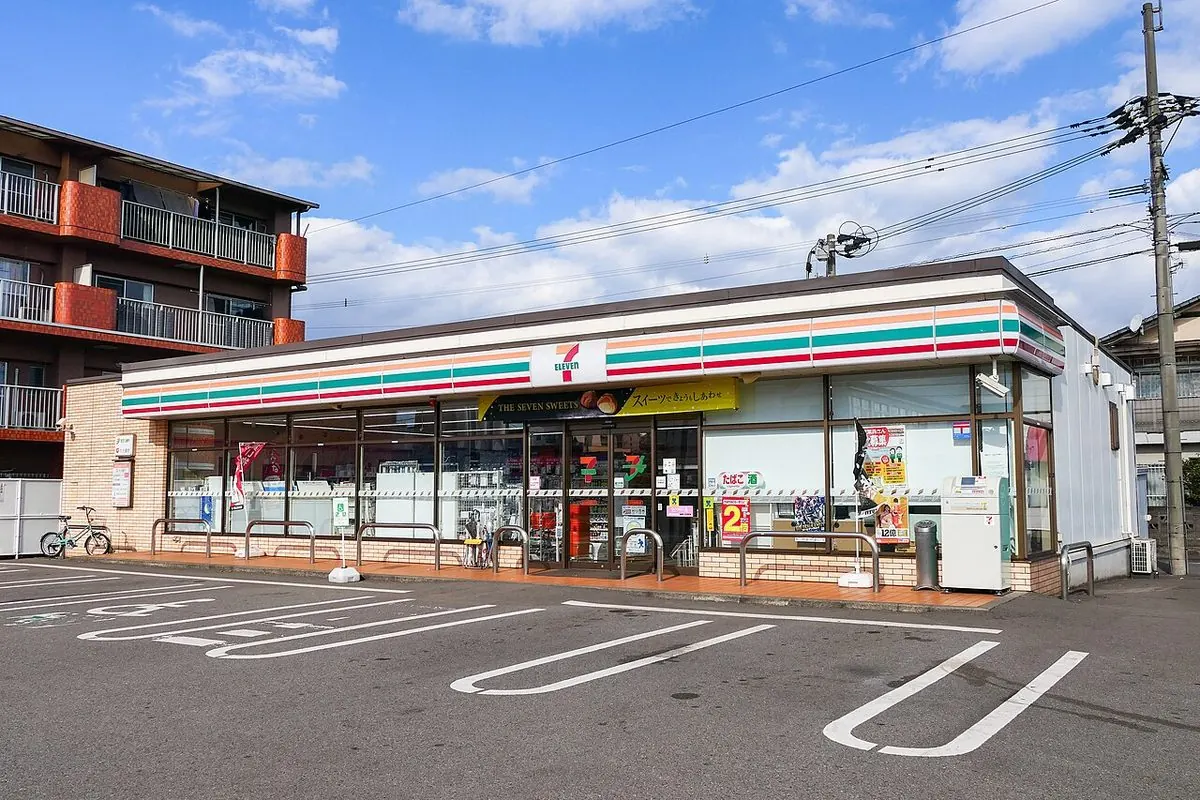
7-Eleven Japan, operated by Seven-Eleven Japan Co., Ltd. (part of Seven & i Holdings Co., Ltd.), is Japan's largest convenience store network with more than 21,000 locations across all 47 prefectures. Operating primarily 24 hours a day, it serves as everyday travel infrastructure where visitors can pick up ready-to-eat meals, drinks, and daily necessities at any hour. Most locations also house international-card-friendly Seven Bank ATMs and multi-function copy machines, while select stores in major tourist areas and airports offer tax-free shopping. Because no membership is required and checkout screens support multiple languages, it is one of the easiest places in Japan for international travelers to grab quick food or withdraw yen.
How to order
Shopping at 7-Eleven Japan combines traditional staff scanning with a semi-self-checkout payment screen facing the customer:
- Pick up shelf and chilled items: Browse the aisles for rice balls (onigiri), sandwiches, bento boxes, bottled beverages, and daily essentials, and carry them to the register counter.
- Request hot snacks or Seven Café at the register: If you want fried hot snacks from the counter case or a cup for fresh-brewed Seven Café coffee (starting around ¥110 as of September 12, 2026), order them directly from the staff at the register before paying.
- Declare if you are eating in-store: If the store has an eat-in seating area and you plan to consume your food or drink inside, tell the cashier before payment so they can apply the 10% dine-in consumption tax rate instead of the 8% takeout rate.
- Select your payment method on the customer touchscreen: After the clerk scans your items, look at the customer-facing touchscreen panel (which you can switch to English, Traditional Chinese, Simplified Chinese, or Korean) and tap your preferred payment method—such as cash, credit card, transit IC card, e-money, or barcode pay.
- Complete payment on the terminal: Insert coins and bills into the automatic cash slot, or tap/insert your card or smartphone on the reader, then collect your receipt and items. If you bought a Seven Café cup, take your cup to the self-serve coffee machine near the counter and press the matching size button.
What to order first
All items below are verified on the 7-Eleven Japan Official Products Guide and row reference data (regional availability and specifications vary by store):
- Onigiri (Japanese Rice Balls): Available in crisp seaweed hand-rolled styles (Temaki Onigiri, such as pickled plum Kishu Nanko Ume, kelp Hokkaido Konbu, or spicy cod roe Karashi Mentaiko) and direct-wrapped styles (Jikamaki Omusubi), priced around ¥130–¥200+ depending on filling and region (as of September 12, 2026; verified on the Official Onigiri Page).
- Seven Café (Freshly Brewed Coffee): Self-serve hot and iced coffee brewed in-store, starting around ¥110 (as of September 12, 2026; verified on the Official Products Guide).
- Bottled Beverages & Seven Premium Snacks: Ready-to-drink bottled teas, water, and soft drinks priced around ¥130–¥180 (as of September 12, 2026), alongside private-label Seven Premium snacks and sweets.
- *Counter Fried Foods & Steamed Buns (Agemono, Nikuman, Oden): Hot counter items including fried chicken, frankfurters, yakitori skewers, and seasonal oden* or steamed buns ordered directly at the register (verified on the Official Products Guide).
Payment & practical info
Tax-free — refund method (checked 2026-11-02): For purchases from 1 November 2026, Japan no longer exempts tax at the register: pay the tax-included price, show your passport and register your refund method as instructed in store, then complete customs confirmation at departure (before checking in baggage) within 90 days of purchase; the store or its refund provider refunds the tax after confirmation. 7-Eleven publishes no dedicated updated tax-free page, so confirm its refund method and any fee in store. General guidance: JNTO — Japan's Tax Exemption.
Services and facilities vary by individual store location, so always check store signage or the Official Store Locator when you need a specific feature:
- Cash & Credit Cards: Cash (JPY) and major credit/debit/brand prepaid cards are widely accepted (Accepted Payment Methods). Contactless (NFC) tap payment works for transactions up to ¥10,000; purchases of ¥10,001 or more require inserting a chip card or swiping. Note that UnionPay (Ginren) credit cards are not accepted for register purchases.
- Transit IC Cards, E-Money & Barcode Payments: You can pay with Japanese transit IC cards (such as Suica, PASMO, ICOCA), electronic money (nanaco, iD, QUICPay, Rakuten Edy), and barcode payment apps including PayPay, d-barai, au PAY, Rakuten Pay, Merpay, WeChat Pay, and Alipay+ partner apps. Note that at 7-Eleven registers, mobile app payments use barcode scanning rather than customer-scanned QR codes.
- Seven Bank ATMs & Multi-Copy Machines: In-store Seven Bank ATMs accept overseas-issued cards for yen cash withdrawals and offer multilingual screen guidance. Multi-copy machines also feature multilingual menus for printing, copying, and ticket services.
- Wi-Fi & Power Outlets: The former free Wi-Fi service (`7SPOT`) has been permanently discontinued. Power outlets are available only at select stores that feature eat-in seating spaces.
- Tax-Free Shopping (refund method): Tax-free shopping is offered only at participating stores displaying the tax-free symbol (primarily in major sightseeing districts and airports) when eligible visitors spend ¥5,000 or more (excluding tax) at the same store on the same day. From 1 November 2026 you pay the tax-included price, show your passport and register your refund method as instructed in store, then claim the tax back after customs confirmation at departure (before checking in baggage, within 90 days of purchase).
Good to know / Common mistakes
- Eat-in (10% tax) vs. Takeout (8% tax) declaration: Food and non-alcoholic drinks in Japan carry an 8% reduced consumption tax rate for takeout, but 10% if consumed in an in-store eat-in area. Always inform the cashier before paying if you plan to use the eat-in counter.
- Looking for discontinued 7SPOT Wi-Fi: Many older travel blogs still mention `7SPOT` free Wi-Fi, which has ended. Do not rely on 7-Eleven for free store Wi-Fi; make sure you have your own eSIM, pocket Wi-Fi, or roaming plan.
- Trying to use contactless card tap over ¥10,000: According to the Official Payment Guide, contactless NFC credit card payments are capped at ¥10,000 per transaction. If your total is ¥10,001 or higher, insert your physical IC chip card instead.
- Strict trash bin sorting: Stores with in-store trash bins separate waste strictly into burnable trash, plastics, and cans/PET bottles. Read the labels before tossing your wrappers, and never dump household or hotel luggage trash in convenience store bins.
FAQ
Q1: How much do everyday items like rice balls and coffee cost at 7-Eleven Japan? As a general guide, onigiri (rice balls) cost around ¥130–¥200, bottled drinks run around ¥130–¥180, and a cup of fresh Seven Café starts at around ¥110 (all approximate, as of September 12, 2026). Regional items and specialty fillings may cost slightly more.
Q2: Do I need to speak Japanese to pay at 7-Eleven? No. While counter hot snacks and coffee cups are requested from the clerk, the payment process itself uses a customer-facing touchscreen with multilingual display options (including English, Traditional and Simplified Chinese, and Korean) where you simply tap your payment method.
Q3: Can I get tax-free shopping at every 7-Eleven in Japan? No, tax-free shopping varies by store and is limited to participating locations—mainly in major tourist hubs and airports—that display official tax-free signage. At those stores, you must spend at least ¥5,000 (before tax) in a single day at the same store. From 1 November 2026 you pay the tax-included price and claim the tax back after customs confirmation at departure (before baggage check-in, within 90 days); the old in-store exemption and sealed-bag rules no longer apply.
Sources
- 7-Eleven Japan Official Website: https://www.sej.co.jp/ (Verified: 2026-09-12)
- 7-Eleven Japan Official Payment Methods Page: https://www.sej.co.jp/services/cash.html (Verified: 2026-09-12)
- 7-Eleven Japan Official Store Locator: https://www.sej.co.jp/shop/ (Verified: 2026-09-12)
- 7-Eleven Japan Official Products Guide & Onigiri Page: https://www.sej.co.jp/products/ / https://www.sej.co.jp/products/a/onigiri/ (Verified: 2026-09-12)