
Sushi · Practical guide
Kyotaru
1932 Historic Takeaway Sushi, Iconic "Chakin-Zushi" Crepe & Shinkansen Bento Hacks
Prices, ordering steps, payment details, and common mistakes — in one place.
Quick Facts
| Feature | Details |
|---|---|
| Japanese name | 京樽 (Kyotaru) |
| Category | Sushi / Historic Kyoto-Style & Edomae Takeaway Sushi, Bento & Ekiben |
| Store Count | Approximately 100–120 takeaway locations nationwide, densely clustered inside major train terminal stations (Ekinaka), underground transit concourses, department store food halls (Depachika), and shopping centers throughout Tokyo/Kanto, operated by Kyotaru Co., Ltd. (part of FOOD & LIFE COMPANIES, the parent of Sushiro) (Store Locator) |
| Ordering Style | 100% takeaway counter service (Omochikaeri Senmon): browse the chilled glass storefront showcases; point to your selected boxed sushi, bento, or single rolls; pay at cashier; bag packed with soy sauce packets, wasabi, and chopsticks; grab and go |
| Membership Required? | No reservation, membership, or ID required |
| Approximate Price Range | Snack rolls and Inari ~¥120–¥250; signature Chakin-zushi ~¥320–¥380; individual sushi bento boxes ~¥650–¥1,200; luxury deluxe nigiri boxes ~¥1,200–¥1,800; all tax-included (subject to revision) |
| Payment Methods | Cash, major credit cards (Visa, Mastercard, JCB, American Express, Diners Club, UnionPay), Japanese transit IC cards (Suica, PASMO, ICOCA), electronic money (iD, QUICPay, Rakuten Edy), and smartphone QR code payments (PayPay, d-barai, 楽天ペイ) conforming to railway station terminals |
| Multilingual Support | Storefront glass cases feature clear English labeling, color product photos, and prominent prices for effortless point-and-pay purchasing |
What it is
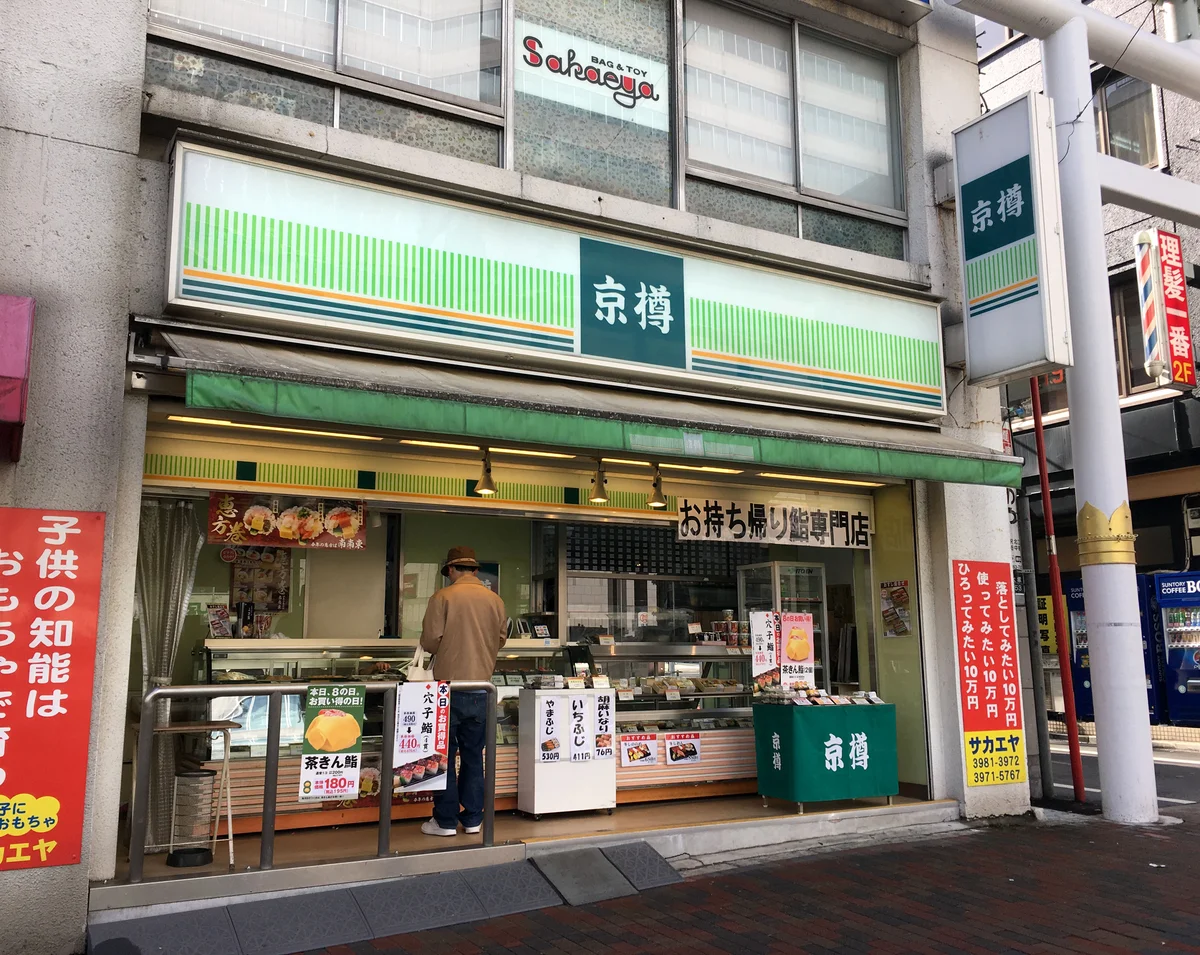
Kyotaru (京樽), founded in the cultural capital of Kyoto in 1932, is an esteemed culinary institution that has spent over 90 years perfecting the art of traditional Japanese takeaway sushi (Omochikaeri-Zushi). Stationed inside Japan's busiest railway stations and department store food halls (Depachika), Kyotaru is world-famous for its singular culinary masterpiece: the "Chakin-Zushi" (茶きん鮨 - Golden Crepe-Wrapped Sushi). In this exquisite creation, seasoned sushi rice tossed with chopped braised sea eel, shiitake mushrooms, and gourd strips is hand-wrapped into a delicate, paper-thin golden egg crepe and tied into an elegant pouch with a green edible ribbon. Providing Kyoto-style pressed mackerel sushi (Battera), festive thick rolls (Futomaki), sweet Inari tofu pockets, and fresh Edomae nigiri bento boxes, it is the ultimate gourmet meal for bullet train (Shinkansen) travel or late-night hotel dining.
How to order
Buying food at Kyotaru is lightning-fast, convenient, and voice-free:
- Approach the chilled storefront showcase: Walk up to the glass display counter inside any major train station concourse (such as Tokyo Station, Shinjuku, or Ueno).
- Browse the visual sushi lineup:
- Signature Chakin-Zushi (名物 茶きん鮨): The iconic yellow egg-crepe wrapped sushi pouch (~¥320–¥380).
- Kyoto Pressed Mackerel Sushi (バッテラ - Battera): Traditional vinegar-cured mackerel pressed firmly over seasoned sushi rice with translucent kombu kelp.
- Sukeroku Bento (助六弁当): The quintessential Japanese picnic set combining sweet Inari fried tofu pockets and savory thick Futomaki rolls (~¥550–¥750).
- Edomae Nigiri Assortment (江戸前にぎり 盛合せ): Bountiful boxes of tuna, salmon, sea bream, squid, and boiled shrimp (~¥850–¥1,400).
- Seasonal Chirashi Bowls (海鮮ちらし): Colorful seafood scattered over seasoned sushi rice.
- Point and specify quantity: Simply point to the item in the glass case and tell the clerk: "Kore o hitotsu" (One of this, please) or show the number on your fingers.
- Pay at the register: Pay via cash, credit card, Suica/transit IC card, or smartphone QR code.
- Collect your packed bag: The clerk will pack your sushi into a sturdy shopping bag complete with chopsticks (waribashi), soy sauce packets (shoyu), pickled ginger (gari), and wet napkins (oshibori).
- Take aboard the Shinkansen or back to your hotel: Board your bullet train, open your drop-down tray table, unwrap your elegant sushi box, and enjoy a peaceful, high-grade feast while watching Japan's countryside zoom past.
What to order first
Dishes below reflect core brand staples officially featured on the Kyotaru Official Website:
- Signature Chakin-Zushi (名物 茶きん鮨): The 1932 masterwork; seasoned sushi rice mixed with braised conger eel, shiitake, and kanpyo, wrapped into a paper-thin yellow egg crepe tied with an edible ribbon (~¥320–¥380 tax-included).
- Kyoto Traditional Battera Mackerel (伝統のバッテラ): Classic pressed sushi layered with cured fatty mackerel, vinegar rice, and thin white kelp (shiraita-kombu) (~¥550–¥680 for a 6-piece box).
- Kyotaru Classic Sukeroku (助六弁当): The time-honored Japanese traveler's companion; pairing sweet dashi-simmered inari tofu pockets with crunchy vegetable futomaki (~¥580–¥720).
- Hana-Nigiri Bento Set (花にぎり詰合せ): Fresh boxed Edomae nigiri featuring tuna, salmon, shrimp, egg, and squid (~¥890–¥1,190).
- Kaisen Chirashi Bowl (海鮮ちらし寿司): Steamed sushi rice topped with diced tuna, salmon roe, shredded omelet, and cucumber (~¥780–¥980).
Payment & practical info
Prices and details checked: October 2026.
- Pricing & Value: Extremely economical gourmet takeaway; picking up a complete sushi bento with Inari, rolls, and a signature Chakin-zushi costs only ¥800–¥1,400.
- Seating & Etiquette: Kyotaru is 100% takeaway (no eat-in seats). Perfect for consuming on bullet trains, long-distance express trains (where eating is culturally welcomed), airport waiting lounges, public parks, or your hotel room.
- Accepted Payment Methods: Accepts Japanese Yen cash, major credit cards (Visa, Mastercard, JCB, Amex, UnionPay), Japanese transit IC cards (Suica, PASMO, ICOCA), electronic money (iD, QUICPay), and mobile QR codes (PayPay, d-barai, 楽天ペイ).
- Convenient Station Locations: Found across nearly every major Tokyo transit hub (Tokyo Station Gransta/Yaesu, Shinjuku, Ikebukuro, Shinbashi, Shinagawa, Ueno).
- Long Shelf Life: Unlike raw nigiri which must be eaten within 1–2 hours, traditional Kyoto items like Chakin-zushi, Battera, and Inari stay moist, delicious, and safe at room temperature for several hours.
Good to know / Common mistakes
- Eat sushi on the Shinkansen.: Eating on standard commuter subway trains is frowned upon in Japan, but eating on the Shinkansen (Bullet Train) and long-distance limited express trains is a beloved, celebrated national tradition (Ekiben culture). Kyotaru is the #1 insider choice for train food.
- The Chakin Crepe craftsmanship: Look closely at the paper-thin egg crepe wrapping the Chakin-zushi. It is cooked so delicately that it has zero browning, remaining a vibrant, uniform sunny yellow. Untie the ribbon or bite right through it.
- Battera thin kelp layer: The translucent, shiny film resting on top of the mackerel in Battera sushi is edible pickled kelp (shiraita-kombu). Do not peel it off—it provides essential sweet acidity that balances the rich oily fish.
- Soy sauce packet inside: Check inside your bag—small fish-shaped plastic bottles or packets of soy sauce and wasabi are included.
- Tipping: Tipping is not customary in Japan, so there is no need to leave a tip. Pay the exact bill at the register.
FAQ
Q1: What does "Chakin" mean? A Chakin (茶巾) is a traditional small hemp cloth used by masters in the Japanese tea ceremony to wipe tea bowls. The sushi pouch is folded and tucked to resemble the elegant shape of this folded tea cloth.
Q2: Is Kyotaru related to Sushiro? Yes. Kyotaru is part of FOOD & LIFE COMPANIES, the parent group that operates Sushiro. While Sushiro focuses on casual conveyor dining, Kyotaru specializes in historic takeaway sushi and traditional Kyoto recipes.
Q3: Can vegetarians eat at Kyotaru? Yes. Kyotaru offers several meat-free takeaway staples, including Inari sushi (sweet fried tofu pockets filled with rice), Kanpyo maki (pickled gourd rolls), cucumber rolls (Kappa-maki), and vegetable futomaki. Note the simmering liquid used for inari tofu and kanpyo often contains fish dashi, so strict vegetarians should check with the store.
Sources
- Kyotaru Official Website: https://www.kyotaru.co.jp/ (Verified: 2026-10-02)
- FOOD & LIFE COMPANIES Corporate Directory: https://www.food-and-life.co.jp/ (Verified: 2026-10-02)