
Retail & Shopping · Practical guide
Toys"R"Us
Japan's Biggest Toy & Baby Stores, Character Toys and Play Zones
What to expect, how it works, payment details, and common mistakes — in one place.
Quick Facts
| Feature | Details |
|---|---|
| Japanese name | トイザらス (Toys"R"Us) |
| Category | Retail / Toys, Games, Kids' and Baby Goods Superstore (Toys"R"Us Japan Official Website) |
| Store Count | 154 Toys"R"Us and Babies"R"Us stores across Japan, transferred to the PPIH Group (the Don Quijote group) on 30 October 2026; the company's own profile rounds this to "about 150 stores" (Corporate Profile, Store Locator) |
| Ordering Style | Self-service superstore: take a shopping cart, browse themed play zones, try the designated hands-on sample toys, and pay at the central registers |
| Membership Required? | No membership or ID required to shop; the free Star Card loyalty programme is optional and aimed at residents |
| Approximate Price Range | One of the widest spreads of any Japanese toy chain: pocket-money mini toys at one end, character playsets, game hardware and kids' bicycles at the other — check current prices on the official online store before you go |
| Payment Methods | Cash and major credit cards as standard; transit IC, e-money and code payments vary by store and host mall |
| Multilingual Support | Limited: service is mainly in Japanese, though global-brand packaging is often multilingual and large mall locations may have some English signage |
| Tax-Free | Not published by the chain — Toys"R"Us Japan does not publish its own tax-free terms on its official site (checked 2026-11-11); see the note under Payment & practical info before you count on a refund |
What it is
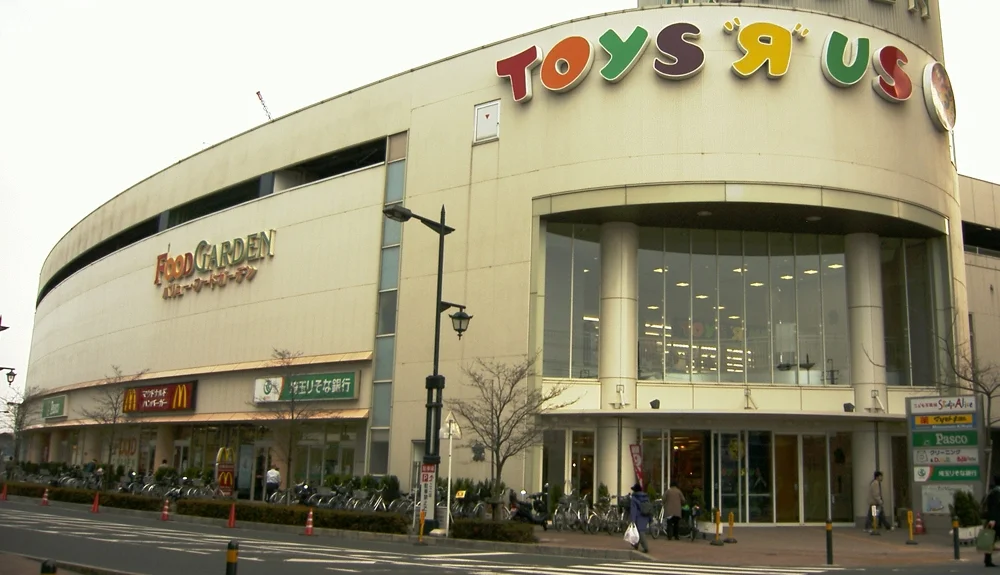
Toys"R"Us Japan (トイザらス), operated in Japan since the first store opened in 1991, is one of the country's largest specialist retailers of toys and baby goods. Most locations are big-box stores inside or beside large shopping malls — AEON Mall and LaLaport locations are typical — and many combine a Toys"R"Us with a Babies"R"Us (ベビーザらス) in a single unit, so toys, games, bicycles, maternity goods, nappies, strollers and baby food sit under one very large roof.
The newest store design organises the floor by how children play rather than by brand: zones for vehicles (のりもの), STEAM and learning toys, and pretend play and dress-up, with sample toys set out so children can touch and try before you buy. Look out for Geoffrey the giraffe, the chain's mascot, at the entrance — a useful landmark when you are navigating a huge mall.
One 2026 change is worth knowing before you go: after a civil-rehabilitation filing on 1 October 2026, the Japanese business was transferred to the PPIH Group — the company behind Don Quijote — on 30 October 2026, and all 154 stores joined the group. The Toys"R"Us and Babies"R"Us names, stores and online store continue to operate as normal, and the stores now also appear in the Don Quijote group's store listings. Nothing about the shopping experience itself has been announced as changing, but it is why you may see the chain described as part of the Don Quijote family.
How to shop
- Find your store first:
- Use the official store locator — opening hours follow the host mall at mall locations (commonly 10:00–21:00) and are shorter at some stand-alone stores (commonly 10:00–20:00), so check the page for the specific shop.
- In big cities you will often have a choice between a mall store near a station and a larger suburban store; pick by how much you plan to carry.
- Work the zones with a cart:
- Floors are zoned by play type and age. Start with the character-toy and vehicle zones for Japan-specific finds, then the STEAM & learning area for gifts that travel well.
- Only the designated sample toys are for hands-on play — boxed stock on the shelves is not, even if the same item is out as a sample nearby.
- Big and bulky items:
- Bicycles, large play equipment and ride-ons are display-led: check stock with staff rather than assuming the display model is the one you take away.
- Think about the box before the register, not after — large character playsets and ride-ons come in suitcase-sized boxes.
- Checkout:
- Pay at the central registers with cash or a major credit card; IC, e-money and code-payment acceptance varies by store.
- If you are buying a gift, ask at the register or service counter about gift wrapping — availability and fees vary by store.
Services & options
- Tomica die-cast mini cars (トミカ): Japan's own long-running miniature car line — an enormous range including Japan-only models of Japanese trucks, buses, trains and emergency vehicles. Small, cheap, sturdy and the easiest souvenir in the store to pack.
- Plarail toy trains (プラレール): The blue-track Japanese train system, with Shinkansen and local-train sets you will not find in overseas toy aisles. Starter sets stack flat in a suitcase.
- Current character toys: Transforming toys, dolls and playsets tied to whatever anime and kids' shows are current in Japan — selection turns over fast, and Japan often gets items months before (or instead of) overseas releases.
- STEAM and learning toys (知育玩具): The learning zone is a strength — Japanese-designed puzzles, construction sets and early-science kits, many with packaging that needs no Japanese to enjoy.
- Babies"R"Us Japanese baby goods: If the combined store has a Babies"R"Us side, it is a practical stop for Japanese nappies, baby snacks and childcare goods that travelling parents often rate above home-country equivalents.
Payment & practical info
- Payment Accepted: Cash and major credit cards at all stores; transit IC cards, e-money and QR code payments depend on the individual store and its host mall.
- Hours: Set by each store — mall locations commonly 10:00–21:00, stand-alone stores often 10:00–20:00. Always confirm on the official store locator, especially around New Year and mall sale days.
- Tax-free — not chain-published (checked 2026-11-11): Toys"R"Us Japan does not publish tax-free shopping terms on its official website, and there is no chain-wide tax-free offer we could confirm from official sources. Treat any purchase here as tax-included. If an individual store or its host mall offers a tax-free procedure, it will be under that store or mall's own terms: under Japan's current refund system you pay the tax-included price, register the purchase with your passport, complete customs confirmation when you leave Japan (within 90 days of purchase, before baggage drop), and the consumption tax is refunded by the store or its operator by the method registered at purchase. Ask at the specific store before you buy — do not assume a refund is available.
- Loyalty: The Star Card is a free points card, but it is designed for residents; there is no need to join for a one-off visit.
Good to know / Common mistakes
- Box size is the real budget: The classic Toys"R"Us mistake is falling for a giant playset or ride-on and only then measuring your suitcase. Check the box dimensions on the shelf label and leave luggage room — or plan to buy the item early in the trip and ship your other shopping around it.
- Assuming tax-free: Unlike Don Quijote and the big electronics chains, this chain does not advertise a tax-free service. Do not build it into your price comparisons.
- Game hardware and electronics: Check region and language settings on game software and the voltage/plug situation for anything with a charger before buying electronics as gifts.
- Age labels are in Japanese: Japanese age guidance (対象年齢) on the box is the manufacturer's recommendation; staff can help if you are matching a toy to a child's age.
- Samples are samples: Children can play with the designated try-out toys in the play zones. Opening or playing with boxed shelf stock will draw a polite but firm staff intervention.
- Christmas and sale periods: December weekends and mall sale days are extremely crowded, and popular character items sell out early in the day. Weekday mornings are the calmest time to browse.
- Mall closing is store closing: At mall locations the store closes with the mall's toy-floor hours, which can be earlier than the mall's restaurant floor. Check the store page, not just the mall's headline hours.
- One register for both brands: In combined Toys"R"Us/Babies"R"Us units the two sides share registers, so you can mix toys and baby goods in a single payment — handy if you are splitting time between a gift run and baby supplies.
- A rainy-day heavyweight: Because most stores are large, indoor and mall-connected, this is one of the easiest family stops to keep on a wet-weather day. Mall locations also put food courts, nursing rooms and rest areas within a short walk — check the mall's floor guide rather than the store page for those facilities.
FAQ
- Q: Is this the same company as Toys"R"Us in the US?
- A: The brand is the same, but the Japanese business has its own history: the first Japanese store opened in 1991, and since 30 October 2026 the Japanese stores have been operated within the PPIH (Don Quijote) Group. Product ranges are chosen for Japan, which is exactly why the shelves differ from overseas stores.
- Q: Can I shop tax-free at Toys"R"Us Japan?
- A: Do not count on it. The chain does not publish tax-free terms, and no chain-wide offer could be confirmed on official sources (checked 2026-11-11). If a particular store or mall offers a procedure, it will explain its own terms — under the current system you would pay the tax-included price and receive the refund after customs confirmation when leaving Japan.
- Q: What is Babies"R"Us doing inside a toy store?
- A: Many Japanese locations are combined units: Toys"R"Us on one side, Babies"R"Us (baby and maternity goods) on the other, sharing registers. It makes the chain a one-stop family store rather than a pure toy shop.
- Q: Is English spoken?
- A: Service is mainly in Japanese. Global brands (LEGO and major game/software lines) carry multilingual packaging, and a translation app plus pointing at the official store page will cover most needs.
- Q: Can I check stock or prices before going?
- A: Yes — the official online store (toysrus.co.jp) lists the range and current prices, and the store locator gives each shop's address and hours.
- Q: Can children play in the store, or is it just shelves?
- A: The current store design builds play in: zones are themed by play type and sample toys are set out for hands-on trying. Only the designated samples are for play — boxed shelf stock stays sealed — but it still makes the store far easier to judge with children in tow than a screen.
- Q: Is it worth a special trip, or just a mall add-on?
- A: For most visitors it works best as a planned mall stop: combine it with the mall's other shopping and food, and target the Japan-specific lines (Tomica, Plarail, current character goods) rather than global brands you can price-compare at home.
Sources
- Toys"R"Us Japan Official Website (Verified: 2026-11-11)
- Toys"R"Us Japan Corporate Profile — "about 150 stores nationwide" (Verified: 2026-11-11)
- Toys"R"Us Japan Store Locator (Verified: 2026-11-11)
- PPIH Group Release — 154 Toys"R"Us/Babies"R"Us stores joined the group on 30 October 2026 (Verified: 2026-11-11)
- Japan Customs — Tax Exemption (Refund) Program for Foreign Visitors (Verified: 2026-11-11)