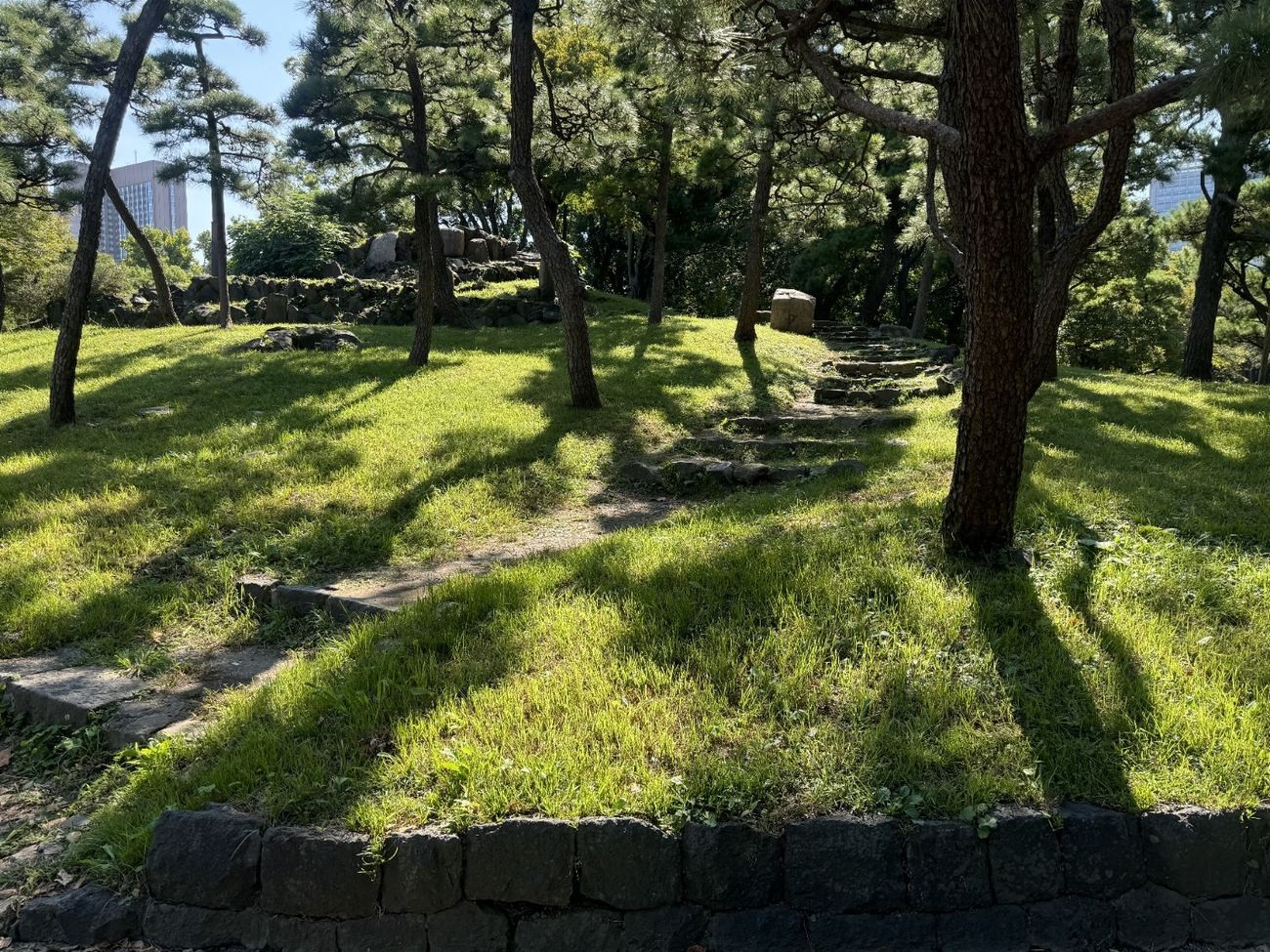
Hibiya’s nine-metre mountain.
You might be close to a mountain without realising it, right in the centre of Tokyo.
If you are staying at the Imperial Hotel Tokyo or stopping by Tokyo Midtown Hibiya for a meal or some shopping, Hibiya Park is within walking distance. Tucked inside it is a small hill with a surprisingly convincing name: Mt. Mikasa.
Its summit sits approximately nine metres above sea level. That is its elevation, not the distance you climb from the park path; the climb itself is shorter. You need neither hiking boots nor a packed lunch.
A mountain made from a park.
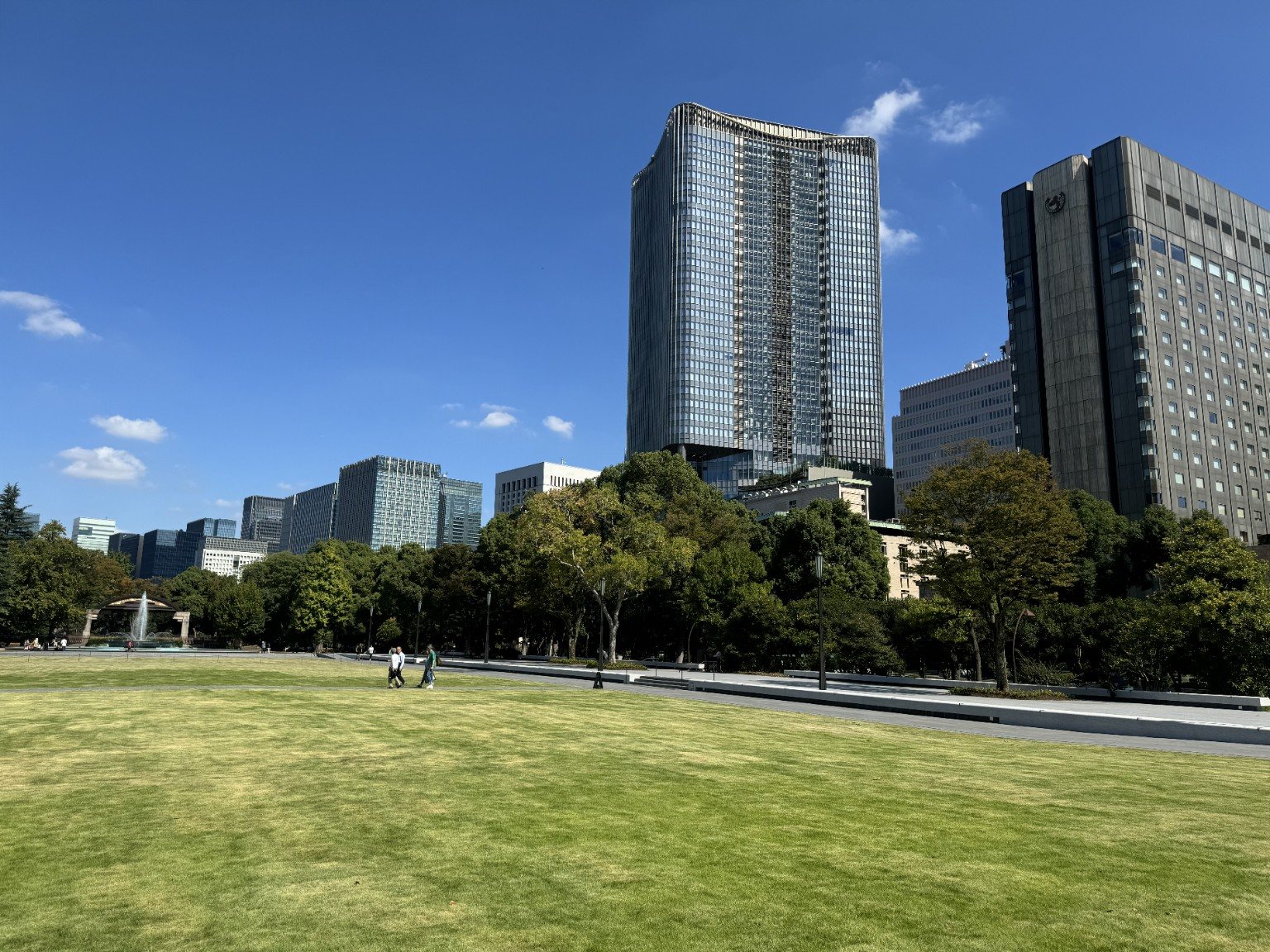
Hibiya Park opened in 1903, on land that had previously been used as an army parade ground. Creating one of Japan's early modern Western-style public parks meant digging ponds, laying paths, planting trees and reshaping the land.
The soil removed for the ponds had to go somewhere. Some of it was heaped into a little mountain.
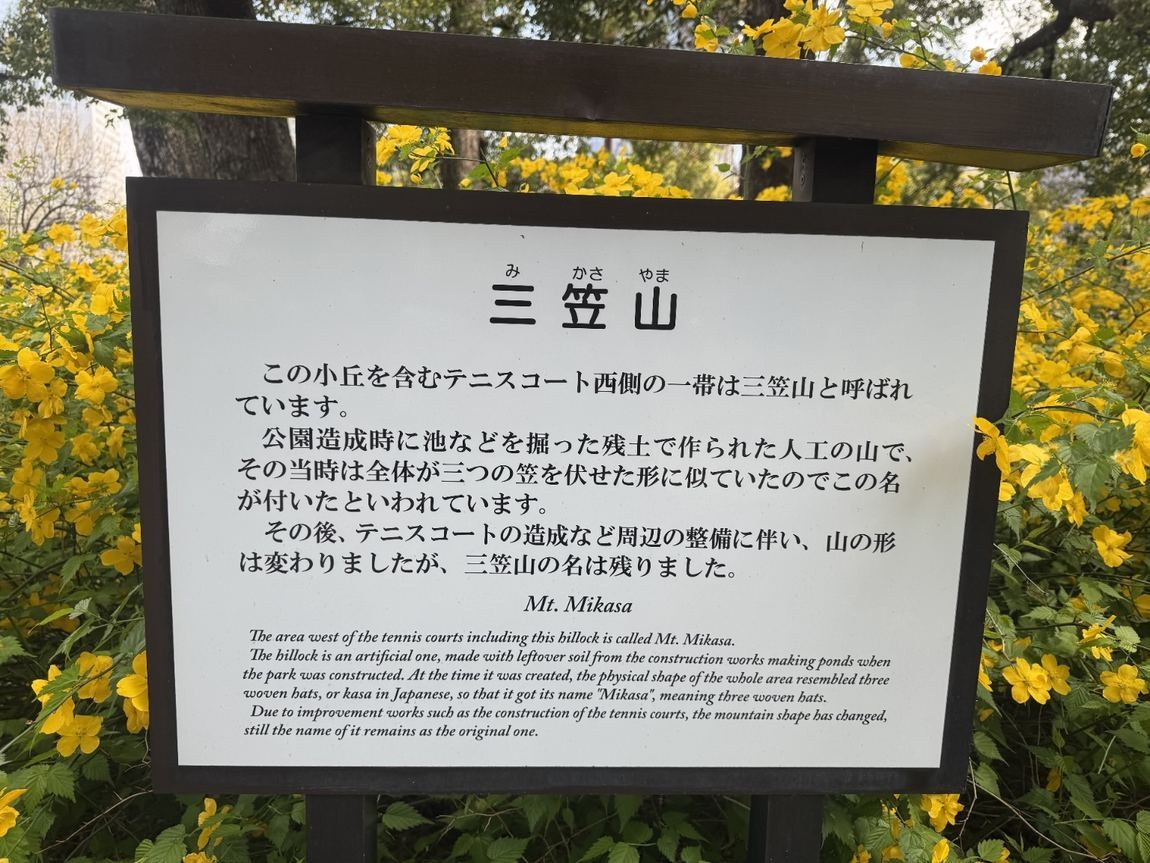
The original mound had three raised sections said to resemble three kasa—traditional Japanese hats set brim-down, with their crowns pointing up. Hence the name Mi-kasa, or “three hats”.
In 1920, part of the hill was cut away to make room for tennis courts, the first built in a Tokyo public park according to the metropolitan government's park history. Two of the original raised sections remain today.
The name stayed, even as the shape changed.
Other mountains in Tokyo.
Although Mt. Mikasa was made by people, it has an entry on Yamakei Online, the website of the long-established Japanese hiking magazine Yama-to-Keikoku. Japan’s national mapping agency, the Geospatial Information Authority of Japan (GSI), sets no minimum elevation that makes a hill a mountain, and does not formally define the difference between the two.
Mt. Atago, near Tokyo Tower, is a natural hill about 26 metres above sea level, with steep steps leading up to Atago Shrine.
Asakusa also has Matsuchiyama, a natural hill of roughly ten metres with a temple on its summit. The hill was once known for its views over the area.
Your first summit.
Enter Hibiya Park through Iwaida Gate (祝田門), near the tennis courts. Look for the rockwork, stone steps and the information sign explaining Mt. Mikasa’s past. If the paths are open, the climb itself is short and needs only comfortable walking shoes.
Don’t expect distant mountain views. Here, the skyline consists of trees and tall city buildings. Against that backdrop, a summit photograph can work rather well, even if the climb has barely raised your pulse.
Look at the remaining raised sections and imagine the three hats that gave the hill its name. The information sign tells the story in Japanese and English.
THERE'S ANOTHER MOUNTAIN.
Somewhere else in Hibiya Park is another named mountain. We won't tell you its name or show you a pin. See if you can find it for yourself.
A detour worth taking.
The climb is small enough to fit into an ordinary walk through Hibiya Park, or a visit to the shops and restaurants nearby.
You can return with an entirely truthful line about your visit to Tokyo: “I climbed a mountain in Tokyo.”
Before you go.
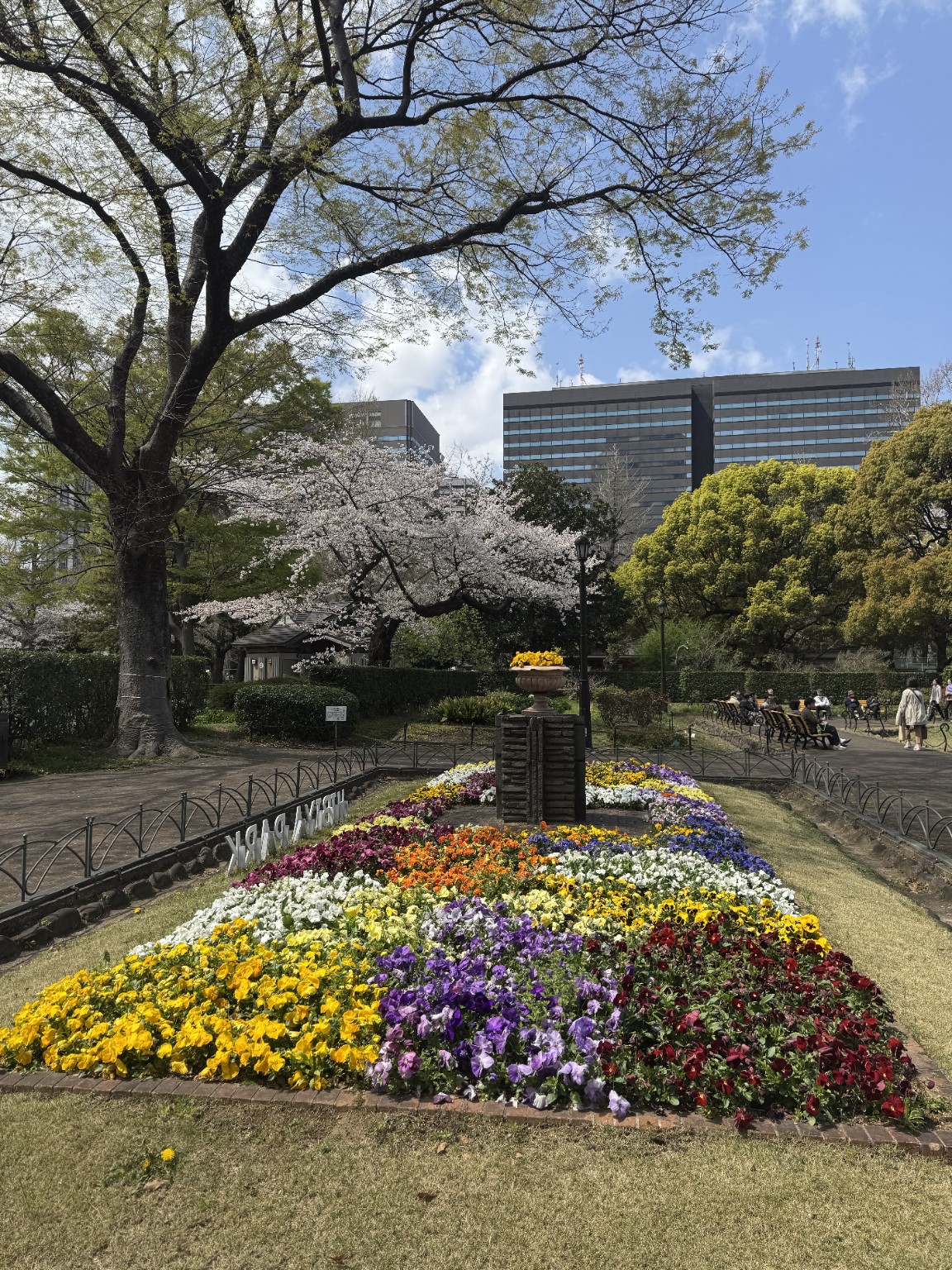
Location: Mt. Mikasa, near Iwaida Gate and the tennis courts in Hibiya Park, Tokyo. Nearby stations include Hibiya and Kasumigaseki. Imperial Hotel Tokyo and Tokyo Midtown Hibiya are also in the neighbourhood. For the park layout, see the official park maps (English available).
Admission: Hibiya Park is free to enter. Terrain: the stone steps and uneven ground are not a step-free route.
Important: The park is undergoing phased redevelopment. Some paths and areas may be closed even while the park is open. Check the Tokyo Metropolitan Government’s Hibiya Park redevelopment notices before visiting.
Research and visit information: Tokyo Metropolitan Government (park history and redevelopment); Tokyo Metropolitan Park Association (park information and maps); Yamakei Online (Mt. Mikasa); Geospatial Information Authority of Japan (mountain and hill FAQ); Taito City (Matsuchiyama).