
Ramen · Practical guide
Ramen Yamaokaya
24-Hour Tonkotsu Ramen, ¥690 Bowls & the Three-Day Soup
Prices, ordering steps, payment details, and common mistakes — in one place.
Quick Facts
| Feature | Details |
|---|---|
| Japanese name | ラーメン山岡家 (Ramen Yamaokaya) |
| Category | Restaurant / tonkotsu (pork-bone) ramen — roadside format, all stores directly operated, no central kitchen (Ramen Yamaokaya Official Website) |
| Store Count | 189 Ramen Yamaokaya stores (end of August 2026, company monthly disclosure) — heaviest in Hokkaido (51 stores) and northern Kanto; the operator runs 200 stores in total including its niboshi and miso sister brands |
| Ordering Style | Ticket machine at the entrance, then take a seat: staff collect your ticket and ask your three preferences — noodle firmness, amount of fat, and strength of flavour |
| Membership Required? | No membership or reservations. An optional free app gives coupons, but you can ignore it entirely |
| Approximate Price Range | Shoyu / miso / shio ramen ¥690; special miso ¥840; premium shio tonkotsu ¥960; morning ramen ¥570; weekday lunch sets ¥840–¥1,190; gyoza (6 pc) ¥370 (tax included, checked November 2026) |
| Payment Methods | Cash and the chain’s cashless ticket machines: supported credit cards, transit IC cards, nanaco, WAON and QR methods. Check the machine’s current supported brands and any temporary outage notices. |
| Multilingual Support | Limited English; the newer touchscreen machines show photos of every dish. Staff will ask your preferences in Japanese — the three answers are easy to learn (see How to order) |
What it is
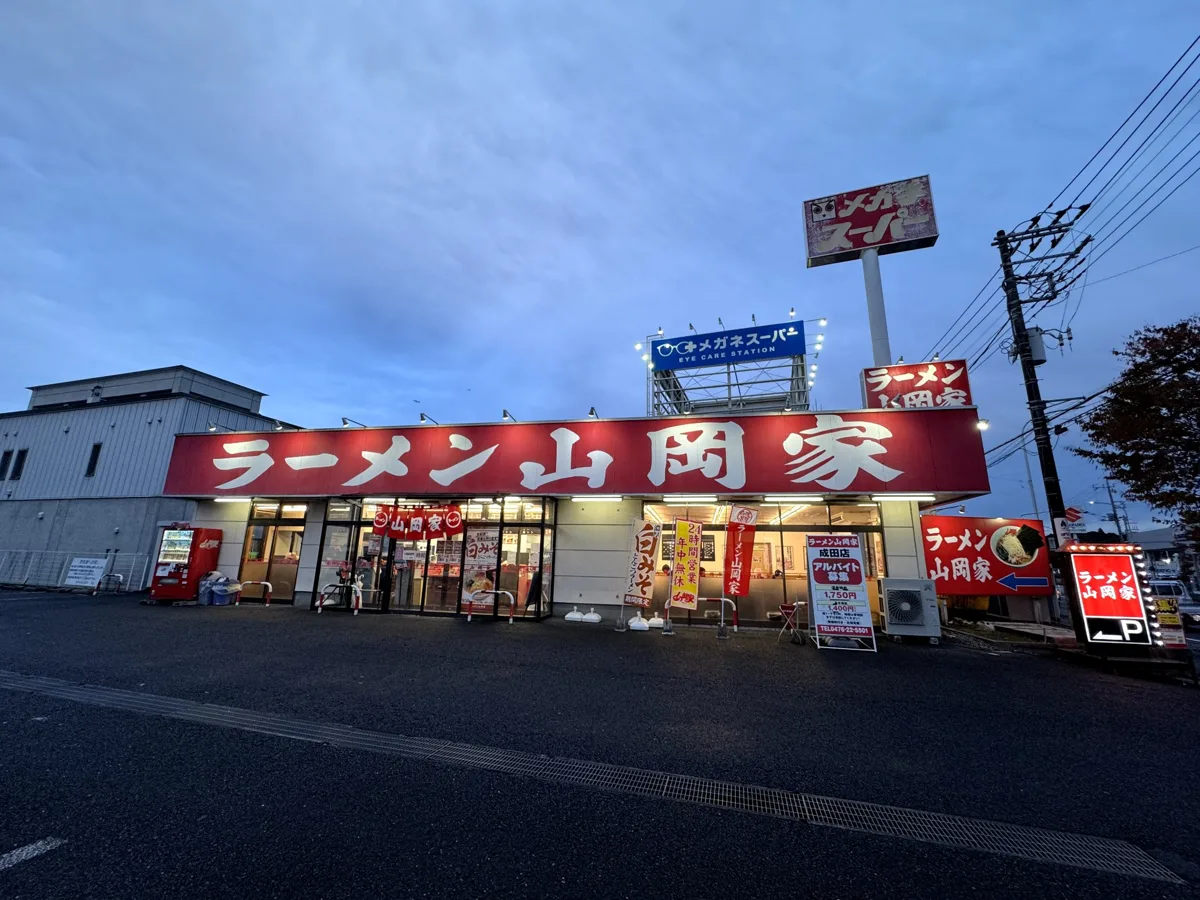
Ramen Yamaokaya (ラーメン山岡家) is the chain that began in Ushiku, Ibaraki, known for the slogan "Gatsun to kite, kuse ni naru" — "it hits you hard, then it hooks you." Founded in Ushiku, Ibaraki, in 1988 and run today by Maruchiyo Yamaokaya (listed on the Tokyo Stock Exchange Standard Market), it grew by doing the opposite of most chains: a mainly roadside, directly operated network with no central kitchen. Stores are directly operated and are mainly roadside locations; many have parking and — with a handful of exceptions — stay open 24 hours a day, 365 days a year.
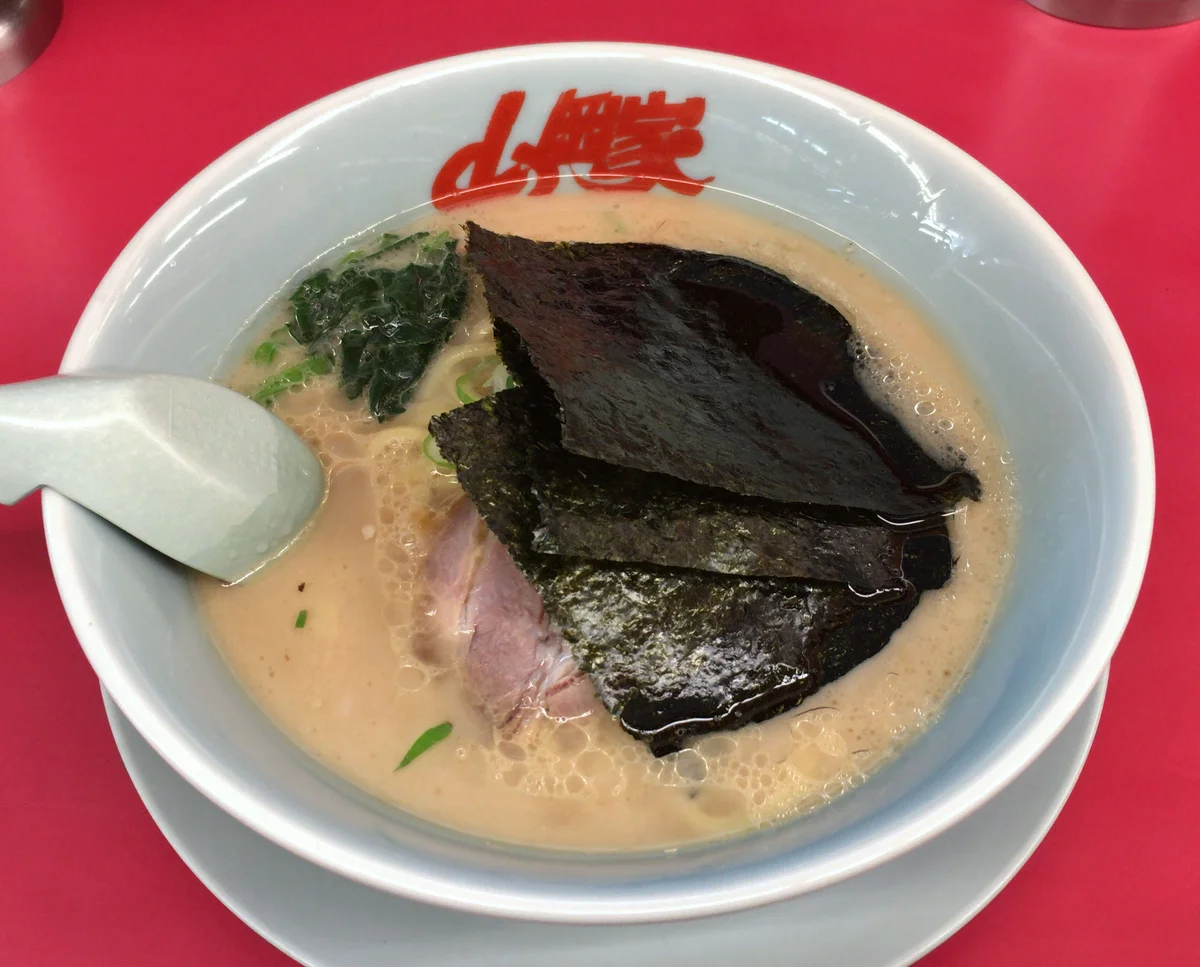
The soup is the whole point. Yamaokaya has no central kitchen: each store simmers its own tonkotsu from exactly two ingredients, water and pork bones, for three full days, serving it on the fourth. Every kitchen keeps four stockpots in rotation — day one, day two, day three, and today's finished soup — so the broth in your bowl is a blend of bones at different stages, giving a soup that is intensely rich yet strangely clean on the finish. The noodles are the chain's signature extra-thick straight noodles, built to stand up to that soup, and the bowls come in five base flavours: shoyu, miso, shio, special miso (tokusei), and spicy miso (kara-miso).
You will smell a Yamaokaya before you see it: real pork-bone soup simmering for days gives off a powerful aroma that fans call the smell of authenticity and first-timers occasionally find startling. It fades into the background within minutes — and the late-night mix of truck drivers, road-trippers and ramen devotees inside is pure roadside Japan.
How to order
- Buy a meal ticket at the machine by the door: Touchscreen machines show photos; choose your ramen, size and any toppings (extra chashu ¥370, seasoned egg ¥150, extra nori ¥150 and more), pay by cash or cashless, and take the ticket.
- Take a seat — counter, table or tatami-style seating depending on the store — and help yourself to water, which is self-service.
- Hand your ticket to staff and state your three preferences when they come to take it. This is the signature Yamaokaya ritual:
- Noodle firmness (麺の硬さ): katame (firm), futsu (regular), yawarakame (soft) — many stores also accept barikata (extra firm).
- Amount of fat (脂の量/あぶらの量): ome (more), futsu (regular), sukuname (less).
- Strength of flavour (味の濃さ): koime (stronger), futsu (regular), usume (lighter).
- First visit? Say "zenbu futsu" (everything regular) — or katame noodles with sukuname fat if you like things a touch lighter. The regular settings are already richer than most ramen shops' "rich" option.
- Eat, and adjust at the table: Garlic, doubanjiang chilli paste and other table seasonings let you push the bowl further mid-meal.
- When you finish, just leave — no tray to return and nothing to pay at a register; everything was settled at the machine.
- Portions — read this before ordering: There is no kaedama (noodle refill) for the regular thick noodles. If you are hungry, size up at the machine instead: chumori (medium) is +¥150 and omori (large) is +¥210. Kaedama exists only for the thinner morning-ramen noodles.
What to order first
- Shoyu Ramen (醤油ラーメン, ¥690): The original, unchanged in spirit for over 30 years — the three-day soup seasoned with soy sauce, topped with chashu pork, spinach, nori and leek. Start here.
- Tokusei Miso Ramen (特製味噌ラーメン, ¥840): The fan favourite — a richer white-miso version of the soup with a deeper, rounder punch. If you only eat one "special" bowl, make it this one.
- Premium Shio Tonkotsu (プレミアム塩とんこつ, ¥960): The top-shelf bowl — the saltiest, creamiest expression of the soup, and the one regulars graduate to.
- Asa Ramen — Morning Ramen (朝ラーメン, ¥570): Served 5:00–11:00 at 24-hour stores only, with thinner noodles, a lighter morning broth and pickled plum paste refreshment on top. It is also the only bowl with kaedama refills (¥150 a full portion, ¥100 a half).
- Tokusei Gyoza (特製ギョーザ, ¥370 for 6): The house dumplings, pan-fried and made to be eaten between slurps. On weekday lunches (Mon–Fri, 11:00–14:00) the Service Sets bundle a ramen with gyoza and rice from ¥840; on weekends the gyoza-and-rice add-on is ¥490 with any ramen.
Payment & practical info
- Payment Accepted: The company records completion of the chain-wide cashless ticket-machine rollout in October 2023. Cash remains an option; check the machine for supported payment brands and temporary service notices.
- Hours: Most stores are open 24 hours, every day of the year; a minority keep shorter hours. New stores occasionally open at 11:00 on day one. Check your store on the official shop search.
- Tax-free: Not applicable. Yamaokaya is an eat-in ramen restaurant, and restaurant meals are not tax-free shopping — the price on the machine, tax included, is what you pay.
- Service tickets (サービス券): Keep the paper tickets issued with eligible ramen orders. Check the current official redemption chart or ask staff for the number needed for each menu item. Tickets for the T-shirt application must be within one year of issue; the official site lists a 50-ticket mail-in T-shirt scheme, with delivery and design conditions.
- App coupons: The free Yamaokaya app (over 2.5 million downloads) issues coupons that are redeemed by printing a ticket at the machine — worth it only if you will visit several times.
- Seating & smoking: Counter, table and raised tatami seating; stores are non-smoking inside. A kids' ramen (¥290) and kids' set (¥490) exist at participating stores.
Good to know / Common mistakes
- "Regular" is already rich: The standard fat and flavour settings sit at what other chains would call extra-rich. Ordering everything at maximum (ome + koime) on a first visit is the classic rookie error — you can always add garlic and chilli at the table.
- The smell is the point: A strong pork aroma hangs around every store because real bones simmer for days on site. It is not poor hygiene — it is the product.
- No kaedama for regular bowls: Repeat visitors from Fukuoka-style shops take note — refills are a morning-ramen-only system here. Size up (+¥150/+¥210) when you order.
- Back-fat swap: For ¥100, the seabura henko topping swaps the liquid oil on your bowl for rendered back fat — a cult customisation that changes both texture and sweetness.
- Sister brands are different shops: The same company runs Niboshi Ramen Yamaokaya (dried-sardine broth), Miso Ramen Yamaokaya and Gyoza no Yamaokaya. The menus and prices there differ from this guide; the red "ラーメン山岡家" sign is the one you want.
- Roadside means roadside: Stores stand along highways and arterial roads, often far from stations. They are perfect on a rental-car trip — and the big car parks are free — but awkward to reach on foot from a city centre.
FAQ
- Q: Is Yamaokaya really open at 3 AM?
- A: At most stores, yes — 24-hour opening, 365 days a year, is the chain's basic policy. A minority of stores differ, so check the official shop page for your location.
- Q: What should I say if I want my ramen less heavy?
- A: Ask for abura sukuname (less fat) and aji usume (lighter flavour) when staff take your ticket — both are free adjustments.
- Q: Is the soup suitable for vegetarians or halal diners?
- A: No. The soup is pork bones and water, the chashu is pork, and there is no alternative broth — this is one chain those diners should skip.
- Q: Can I take ramen home?
- A: The bowls are eat-in only, but stores sell the chain's dried noodles (¥410) and frozen gyoza (¥390 a pack) to cook at home, and the official online shop, Yamaokaya Shoten, ships nationwide within Japan.
- Q: Why do people collect the little paper tickets?
- A: Service tickets are the chain's loyalty currency: the current redemption chart shows which menu items each ticket total can earn, which on a long trip adds up quickly.
Sources
- Ramen Yamaokaya Official Website — Regular Menu (Verified: 2026-11-11)
- Ramen Yamaokaya Official Website — Morning & Lunch Menu (Verified: 2026-11-11)
- Ramen Yamaokaya Official Website — Side Menu, Toppings & Drinks (Verified: 2026-11-11)
- Ramen Yamaokaya Official Website — Kodawari: the Three-Day Soup (Verified: 2026-11-11)
- Ramen Yamaokaya Official Website — Service Tickets (Verified: 2026-11-11)
- Maruchiyo Yamaokaya Corporate Site — Business Overview (Verified: 2026-11-11)
- Maruchiyo Yamaokaya Monthly Sales Flash, August 2026 — 189 Ramen Yamaokaya stores (Hokkaido 51, Honshu 133, Shikoku 1, Kyushu 4); 200 stores in total (company disclosure via JPX)