
Noodles · Practical guide
Yudetaro
Fresh-Milled Soba Noodles, ¥430 Mori Soba & Japan's Biggest Soba Chain
Prices, ordering steps, payment details, and common mistakes — in one place.
Quick Facts
| Feature | Details |
|---|---|
| Japanese name | ゆで太郎 (Yudetaro) |
| Category | Restaurant / Japanese soba — noodles made from flour and boiled in-store daily; self-service format (Yudetaro Official Website) |
| Store Count | About 240 stores nationwide — 220 in the Yudetaro System chain (end of July 2026, company monthly report) plus roughly two dozen run directly by founding company Shinetsu Shokuhin, mostly in central Tokyo; Japan's largest soba chain by store count |
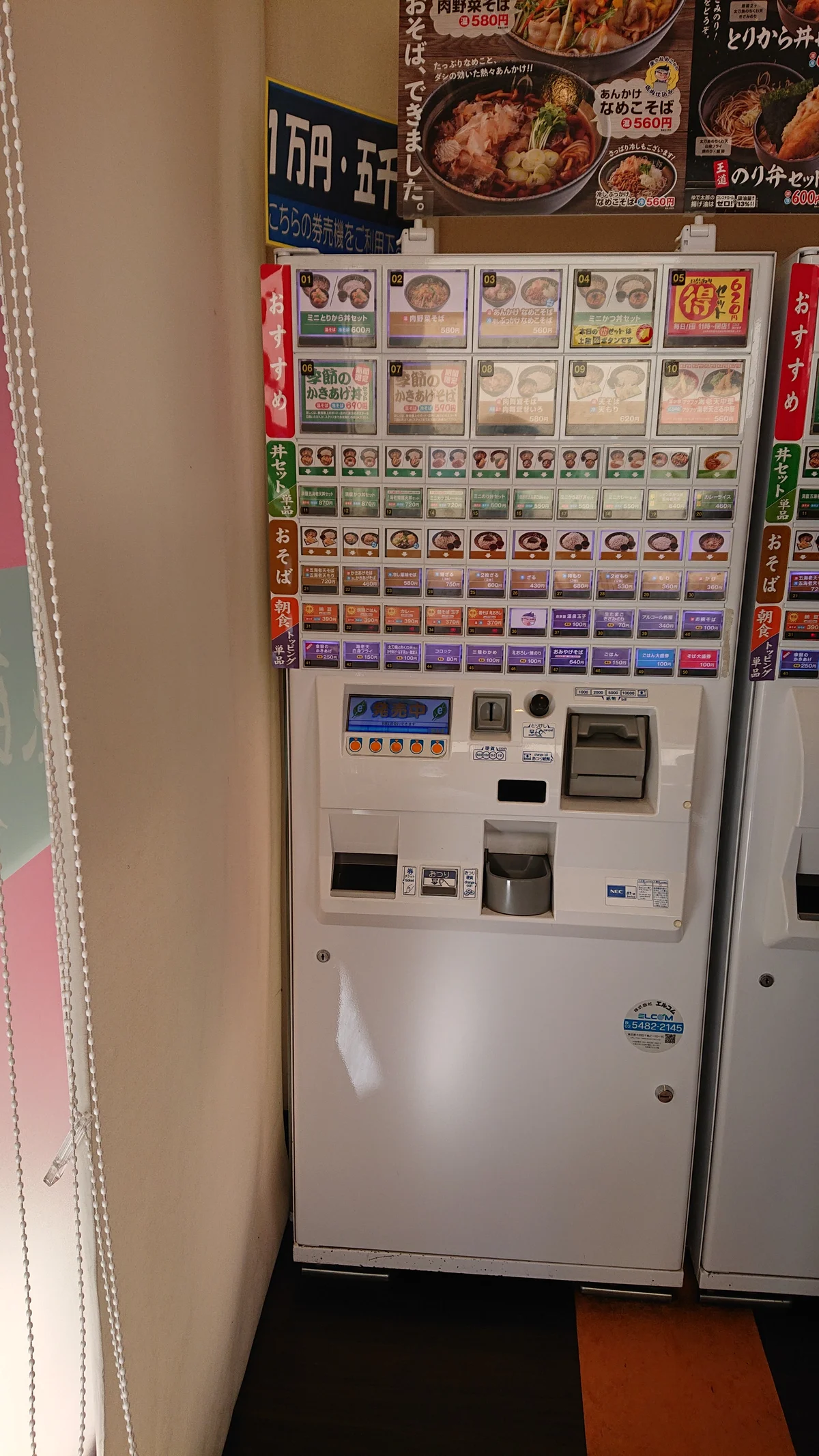
| Ordering Style | Ticket machine at the entrance: buy a meal ticket, hand it to the counter staff, collect your tray when your number is called, return the tray yourself after eating |
| Membership Required? | No membership, no reservations — walk in, buy a ticket, eat |
| Approximate Price Range | Mori soba ¥430; hot kakiage soba ¥550; soba + mini rice-bowl sets ¥750–¥950; breakfast soba ¥450; toppings ¥70–¥370 (Yudetaro System menu, tax included, checked November 2026) |
| Payment Methods | Cash at the ticket machine — treat cash as essential. Transit IC cards (Suica, PASMO etc.) work at only some stores; do not assume credit-card or QR payment support; confirm the individual store |
| Multilingual Support | Limited: ticket machines use large photos of every dish, so ordering by picture works without Japanese; staff English is not guaranteed |
What it is
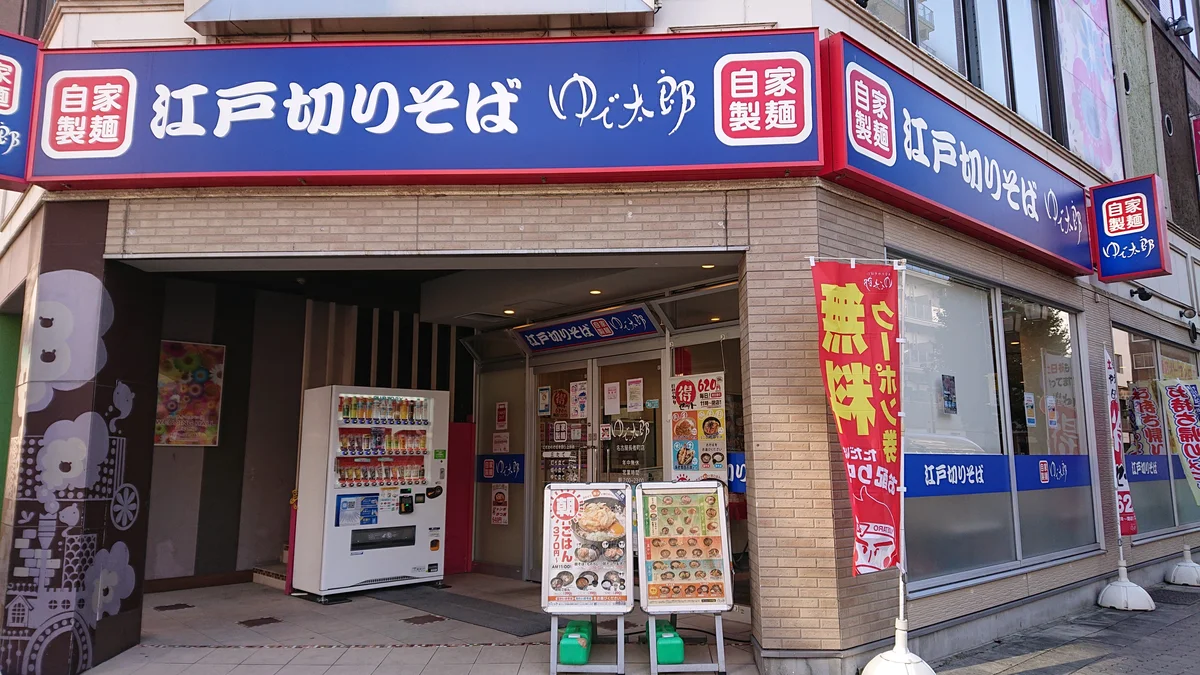
Yudetaro (ゆで太郎) is Japan's biggest soba chain, and the first thing to understand is that it is run by two separate companies under one sign. The brand was founded in 1994 by Shinetsu Shokuhin, whose first shop — the Minato store — opened in Tokyo; in 2004, Yudetaro System was founded to expand the brand nationwide under a master-franchise agreement, opening its own first directly-run shop in Nishi-Gotanda, Tokyo, that December. The two companies have no capital relationship, they share ingredient purchasing, and — the part that matters for visitors — some regular and seasonal menu items and prices differ slightly between the two groups. The official website even posts two separate menus, and its store list labels every shop with its operator. Shinetsu Shokuhin still runs its founding-generation shops, roughly two dozen of them, concentrated in central Tokyo wards such as Ota and Minato; Yudetaro System runs everything else, directly and through franchisees.
What both groups share is the founding obsession, summed up as the "three tate" (三たて): hiki-tate (flour freshly milled), uchi-tate (noodles freshly made), yude-tate (noodles freshly boiled). Every store makes its own soba noodles from flour on site, every day, and the dipping broth is also made in-store from dashi. This is fast food built like a neighbourhood soba shop — which is exactly where the brand's roots lie.
The other surprise for visitors expecting station-style standing counters: Yudetaro System deliberately expanded into suburban roadside locations (roughly 80% of its stores), with proper seating, family-friendly tables and parking. Only a minority of shops are the classic stand-and-eat format. Since 2021 most Yudetaro System stores also share their premises with a sister brand, Motsujiro (もつ次郎), serving simmered offal rice bowls — 214 of the 220 system stores were co-located, usually with its own separate ticket machine beside the soba one.
How to order
- Find the ticket machine by the door: At Motsujiro co-located stores there are two machines side by side — one for soba, one for Motsujiro. Make sure you are buying from the right one.
- Feed in cash first, then press the photo button for your dish. Buttons are grouped by hot soba, cold soba, sets and toppings. Prices include tax.
- Hand the ticket to the counter staff and keep the stub. Your soba is boiled to order, which takes a few minutes.
- Listen for your number to be called, then collect your tray at the counter.
- Season it yourself: stores have a free self-service condiment corner (the "¥0 topping" corner on the official topping menu) plus the usual shichimi pepper and chopped leek on the counter. Take only what you will use.
- After eating, return your tray to the return slot (返却口) — Yudetaro is self-clearing.
- Portions: Any noodle or rice dish can be upsized for +¥100. Cold mori soba also comes in double (2-mori, ¥790), triple (toku-mori, ¥980) and a famous 1-kilo serving (¥1,300).
What to order first
- Mori Soba (もりそば, ¥430): The signature — a chilled mound of fresh noodles with a small pot of dipping broth. A direct way to taste the noodles made in-store. Cold noodles on a woven tray; dip, slurp, repeat. It is the bowl regulars judge the whole chain by.
- Vegetable Kakiage Soba (野菜かき揚げそば, ¥550): Hot soba crowned with a crisp disc of mixed-vegetable tempura — the classic Yudetaro bowl, also available cold.
- Mini Katsudon Set (ミニかつ丼セット, ¥950): Hot or cold soba plus a mini pork-cutlet rice bowl. On the daily lunch deal (11:00–17:00) the set of the day drops by ¥100 — Monday/Saturday is this katsudon set at ¥850.
- Asa Soba Breakfast (朝そば, ¥450): Served from opening until 11:00 — warm soba with vegetable kakiage and grated daikon (or an egg), at the chain's best price. Breakfast sets with a mini rice bowl run ¥500–¥590.
- Gorogoro Kamo Seiro (ゴロゴロ鴨せいろ, ¥890): The premium pick — cold noodles with a hot, chunky duck dipping broth.
- Ten-Tama Soba (天玉そば, ¥620): Hot soba with a kakiage tempura disc and an egg — the full old-school station-soba experience, upgraded with fresh noodles. On a hot day, the cold Hiyashi Yakumi Soba (¥760) piles on wakame, grated daikon, bonito flakes and leek instead.
Payment & practical info
Prices and details checked: July 2026.
- Payment Accepted: Cash at the ticket machine. A minority of stores (flagships such as Nishi-Gotanda) accept transit IC cards, and the company is gradually extending IC acceptance — but do not assume credit-card or QR support without checking the individual store, so always carry cash, ideally ¥1,000 notes and coins.
- Hours: Vary widely by store. Many open at 6:00 or 7:00 in the morning; some roadside stores run 24 hours. Check the official store list for the shop you plan to visit.
- Tax-free: Not applicable. Yudetaro is an eat-in restaurant, and restaurant meals are not tax-free shopping — you simply pay the tax-included price shown on the machine.
- Late-night surcharge: Some stores add a late-night charge between 22:00 and 5:00, as noted on the official menu.
- Free coupons: Several times a year Yudetaro runs free-coupon campaigns — sheets of coupons for free toppings and sides, handed out in store and redeemable on later visits (for example, the autumn 2026 coupons were valid through the end of November 2026). If staff hand you a coupon sheet, keep it.
- Takeout: Items marked with the takeout symbol on the menu can be taken away; takeout soba is served cold, bukkake style.
Good to know / Common mistakes
- Two companies, two menus: A shop run by Shinetsu Shokuhin (mostly older, central-Tokyo locations) may not have the exact item or price you saw on the Yudetaro System menu — and vice versa. The official store list marks each shop "信越食品" or by its system affiliation, so check before you go with your heart set on one dish.
- Arriving with only a credit card: The single most common visitor mistake. The ticket machine wants cash.
- Buying from the Motsujiro machine: At co-located stores the offal-bowl machine sits right next to the soba machine. Soba buttons show noodle photos — check the picture before paying.
- Expecting a standing-only stall: Most roadside Yudetaro have full seating, wheelchair-friendly layouts and parking; only some urban shops are standing format.
- The 1-kilo mori is real: The ¥1,300 "1 kilo mori" is a full kilogram of noodles. Order it to share or as a challenge, not as a light lunch.
- Broth note: The dipping broth is a traditional fish-based dashi, and there is no separate vegetarian menu — strict vegetarians should treat Yudetaro as a look-but-don't-eat stop.
- An eastern-Japan chain, for now: The network runs from Hokkaido to Fukuoka but leans heavily east — of the 220 system stores in July 2026, 203 were on Honshu (mostly Kanto), 14 in Hokkaido, and just one in Shikoku and two in Kyushu. Osaka's first system stores are only just opening, so in western Japan you may simply not find one yet.
- Your noodles do a little good: Part of the price of every bowl feeds the Yudetaro Yume Fund, the chain's charitable programme — cumulative donations passed ¥200 million in October 2026, according to the company's own announcement.
FAQ
- Q: Is Yudetaro a standing-only soba bar?
- A: No. A minority of city-centre shops are standing format, but most stores — especially roadside ones — have tables and chairs and welcome families.
- Q: Why do two companies run the same brand?
- A: Shinetsu Shokuhin founded Yudetaro in 1994; Yudetaro System was created in 2004 to franchise it nationwide under a master-franchise contract. They share purchasing and the core menu, but keep slightly different line-ups.
- Q: Can I pay by card or phone?
- A: Plan on cash. Transit IC cards work at some stores only; check the individual store for credit-card or QR support.
- Q: What is Motsujiro, the brand inside most stores?
- A: A sister brand specialising in motsuni (simmered pork offal) rice bowls and set meals, ordered from its own ticket machine in the same shop.
- Q: Is breakfast really ¥450?
- A: Yes — the morning soba (until 11:00; from 5:00 AM at 24-hour stores) is ¥450 including tax, and it uses the same fresh in-store noodles as the rest of the day.
- Q: What does the "three tate" slogan mean?
- A: Freshly milled flour, freshly made noodles and freshly boiled noodles. The official explanation says flour is milled at designated mills, then made into noodles in each store.
Sources
- Yudetaro Official Website — Menu (Yudetaro System group) (Verified: 2026-11-11)
- Yudetaro Official Website — Company History (Verified: 2026-11-11)
- Yudetaro System Monthly Sales Flash, July 2026 (store count: 220 system stores, 214 with Motsujiro) (Verified: 2026-11-11)
- Yudetaro System Recruiting Site — About / Store Count (Verified: 2026-11-11)
- Shinetsu Shokuhin Official Website (Shinetsu-group menu and stores) (Verified: 2026-11-11)