
Family Dining · Practical guide
JUNKUDO
Ikebukuro Mega-Store, Academic Books, Manga & Tax-Free Tips
Prices, ordering steps, payment details, and common mistakes — in one place.
Quick Facts
| Category | Detail |
|---|---|
| Japanese name | ジュンク堂 (Junkudo) |
| Brand Name | JUNKUDO / ジュンク堂書店 (株式会社丸善ジュンク堂書店 / Maruzen CHI Holdings Co., Ltd. Group) |
| Store Type | Massive specialized mega-bookstore, academic library emporium & multi-floor literary warehouse |
| Target Audience | Scholars, university researchers, architects, manga collectors, and travelers seeking exhaustive depth across specialized Japanese publications |
| Ordering Style | Tranquil self-service browsing marked by floor-to-ceiling wooden bookshelves and comfortable reading chairs throughout the aisles |
| Membership Required? | No membership or Japanese resident ID required for general shopping; physical foreign passport required for Tax-Free purchase registration |
| Approximate Price Range | Paperbacks, tankobon manga, and literary essays ~¥500–¥1,400; design guides, photography books, and language dictionaries ~¥2,200–¥8,500; specialized medical, legal, and engineering encyclopedias ~¥6,000–¥50,000+ (subject to revision); Tax-Free available on eligible purchases of ¥5,000+ (excluding tax) at participating locations |
| Multilingual Support | English floor directories; honto digital stock lookup terminals feature multilingual search functionality; bilingual customer service staff at major flagships (Ikebukuro Main Store, Osaka Umeda) |
| Payment Methods | Cash (JPY), International Credit Cards (Visa, Mastercard, JCB, American Express, Diners Club, UnionPay), Transit IC (Suica, Pasmo, ICOCA), e-Money (iD, QUICPay), QR Mobile Pay (PayPay, Rakuten Pay, d-Barai, etc.) |
| Store Network | Approximately 50 domestic stores across Japan (over 90 stores across the entire Maruzen Junkudo Group), anchored by colossal multi-story urban flagship towers in Tokyo (Ikebukuro), Osaka (Umeda), and Naha (Okinawa) |
What it is
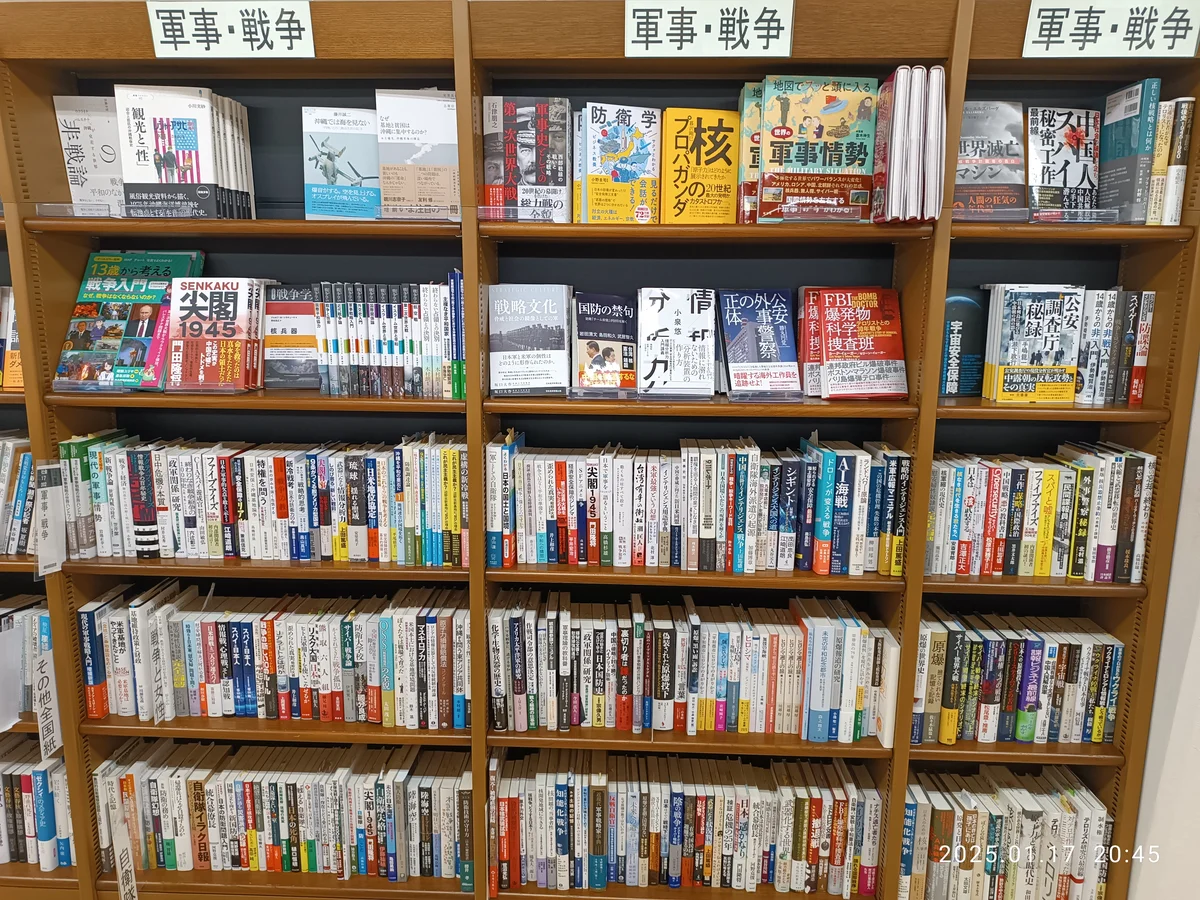
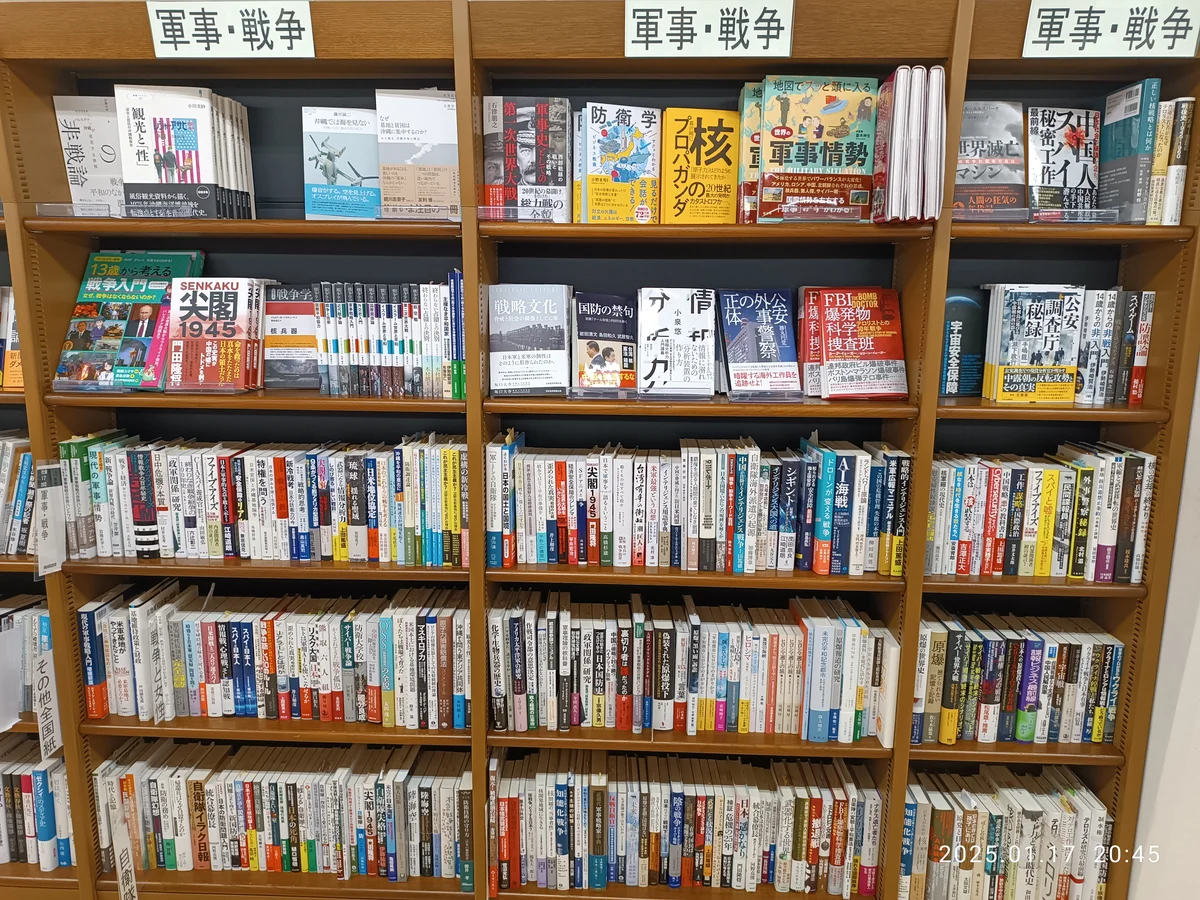
JUNKUDO (ジュンク堂書店)—whose predecessor Daido Shobo began in Kobe in 1963, with the first JUNKUDO shop opening in 1976—revolutionized modern bookselling with its radical architectural concept: creating a "Forest of Bookshelves" (本棚の森). Rather than treating books as disposable, high-turnover consumer items, JUNKUDO designed towering, library-style emporiums with floor-to-ceiling wooden shelving and deliberately placed comfortable reading chairs throughout the aisles, welcoming readers to sit, browse, and reflect. Today, operating under Maruzen Junkudo Bookstores, JUNKUDO represents the pinnacle of exhaustive inventory depth.
The brand's flagship destination is Junkudo Ikebukuro Main Store (池袋本店) in Tokyo. Spanning ten vertical floors (Basement 1 through 9th floor) and holding over 1.5 million volumes, it is one of the largest standalone bookstores in East Asia. Where conventional shops carry only popular bestsellers, Junkudo maintains entire multi-aisle sections for niche academic disciplines—from organic chemistry and quantum physics to ancient Buddhist history, traditional timber joinery, and complete author backlists. Alongside this academic majesty, Junkudo dedicates entire floors to original Japanese manga, anime visual monographs, and fine art books, making it a sacred haven for curious minds from around the world.
How to order
Step 1: Navigating the Ikebukuro Store
- The store occupies B1 through 9F. Use the current floor guide and search terminals for the exact department and shelf.
- Current operator information places humanities on 4F, medicine and computer books on 6F, science and engineering on 7F, children’s books on 8F and art on 9F. These categories are not interchangeable with the older or unverified floor assignments in some guides.
- For manga, complete series or a particular specialist title, confirm the floor and actual stock before heading upstairs or planning a bulk purchase.
Step 2: Utilizing In-Store Reading Chairs
- A signature feature of JUNKUDO is the presence of reading chairs and small writing desks placed at the ends of book stacks.
- Feel free to pull several candidate art books or technical manuals from the shelves, sit down comfortably, and review the contents before deciding which volumes to purchase.
Step 3: Searching Real-Time Stock with honto Kiosks
- If searching for an elusive academic publication or specific manga volume, locate a honto search kiosk on any floor.
- Switch the interface to English and enter title or ISBN keywords. The terminal prints a locator slip showing the floor number, shelf section (e.g., Shelf 8-C-12), and in-stock count.
Step 4: Checkout & 2026 Tax-Free Refund Procedure
- Tax-free eligibility varies by store. In major international tourist stores (including Ikebukuro Main Store, Osaka Umeda, and Naha Store), proceed to the designated Tax-Free Cashier Counter (免税対応レジ).
- Inform the cashier: "Tax-Free kudasai" and hand over your original physical passport (digital photos or photocopies are strictly prohibited by Japanese tax law).
- Under Japan's airport refund tax-free mechanism (enacted November 1, 2026):
- Pay the full tax-inclusive total at the counter using cash, international credit cards, or supported mobile payments.
- The participating retailer verifies your eligibility and registers the tax-free purchase electronically in the National Tax Agency’s system, directly or through an approved provider. Follow the shop’s passport or supported Visit Japan Web procedure.
- Using non-consumable purchases: Books, academic manuals, art collections, and manga may be used or worn as appropriate while traveling in Japan if you carry the same items out of Japan for customs export verification within 90 days. The former legal categories of “General Goods” and “Consumables” were abolished on November 1, 2026, and special sealed packaging is no longer required.
- At the airport on departure day (within 90 days of purchase, and BEFORE checking your baggage with your airline), present your passport at a tax-free procedure terminal for export confirmation. Keep all purchased tax-free goods available; show them at the customs inspection area only if a red result requires it.
- The tax refund is executed by the merchant where purchased or its designated refund operator, using the method registered at the time of purchase (such as a direct credit card account reversal). At some airports, participating purchases may qualify for cash collection at a designated refund terminal; check the availability and registered refund method with the seller.
What to order first
1. Complete Japanese Manga Series Sets & Author Collections
- Japanese Name: コミック全巻セット / 作家別コレクション
- Price: ~¥5,000–¥25,000+ (tax-included; subject to revision)
- Why It Is Essential: Basement 1 at Junkudo Ikebukuro is one of the most comprehensive manga departments in Japan. While smaller comic shops only stock the latest issues, Junkudo keeps complete historical runs of classic series—from Osamu Tezuka, Akira Toriyama, and Rumiko Takahashi to modern epics—making it effortless to purchase an entire multi-volume series in one visit.
2. Traditional Japanese Woodworking & Sukiya Architecture Manuals
- Japanese Name: 日本伝統木造建築・大工道具・継手仕口専門書
- Price: ~¥3,850–¥18,700 (tax-included; subject to revision)
- Why It Is Essential: Junkudo’s specialist architecture selection is a useful place to browse; check the current floor guide and shelf location before visiting. Discover exhaustively detailed textbooks documenting complex Japanese joinery (Tsugite and Shiguchi) with millimeter-precision diagrams and photography that cannot be sourced anywhere else in the world.
3. Japanese Typography, Graphic Design & Kanji Calligraphy Manuals
- Japanese Name: 日本のタイポグラフィ・装丁デザイン年鑑・漢字書道手本
- Price: ~¥3,080–¥14,300 (tax-included; subject to revision)
- Why It Is Essential: Graphic designers and typographers worldwide treasure Junkudo's graphic arts floor. Browse annual anthologies of Tokyo Art Directors Club (Tokyo ADC) award winners, master books on kanji brush calligraphy, and innovative packaging design collections.
4. Japanese Culinary Science, Knife Sharpening & Dashi Recipe Textbooks
- Japanese Name: 日本料理調理科学・出汁・包丁研ぎ専門料理書
- Price: ~¥2,420–¥8,800 (tax-included; subject to revision)
- Why It Is Essential: Moving far beyond simple tourist cookbooks, Junkudo stocks professional culinary institute textbooks used by Michelin-starred washoku chefs. Explore scientific breakdowns of umami extraction in dashi broth, microscopic photography of whetstone grit knife bevels, and traditional Kyoto kaiseki seasonal preparation guides.
5. Japanese Language Learning Textbooks (Minna no Nihongo & JLPT Prep)
- Japanese Name: 日本語教育専門書 (みんなの日本語 / JLPT N1〜N5対策)
- Price: ~¥1,320–¥3,080 (tax-included; subject to revision)
- Why It Is Essential: If you are studying Japanese, Junkudo carries the definitive range of textbook series including Minna no Nihongo, Genki, and comprehensive JLPT test preparation manuals from N5 through N1, complete with audio study materials and Kanji stroke-order dictionaries.
Payment & practical info
Prices and details checked: November 2026.
- Accepted Payment Modes: Cash (JPY), major global credit cards (Visa, Mastercard, JCB, American Express, Diners Club, UnionPay), transit IC cards (Suica, Pasmo, ICOCA), e-money (iD, QUICPay), and mobile QR codes (PayPay, Rakuten Pay, d-Barai, etc.).
- Tax-Free Refund Rules (Enacted November 1, 2026):
- Minimum eligible spend: In general, qualifying goods purchased by the same person at the same participating tax-free store on the same day must total ¥5,000 or more before tax. Ask staff how multiple checkouts are registered. Eligible purchases from different stores can be combined only where the designated joint tax-free procedure permits this.
- Pay full tax-inclusive price at checkout; passport is electronically registered; obtain customs export verification at the airport before checking baggage; refund is processed back to the registered payment method by the merchant or refund operator.
- Books and study materials are non-consumable products and may be used during your trip in Japan; must be exported within 90 days.
- Operating Hours: Ikebukuro Main Store operates from 10:00 to 22:00 daily (hours vary by store).
- Reading Environment: Unlike fast-paced transit book kiosks, Junkudo encourages quiet, contemplative reading. Visitors are welcome to sit and review books thoroughly before purchasing.
- Promotional Discounts: Promotional discount campaigns or digital coupons may be offered during specific promotional periods. These offers typically specify clear validity windows, exclude price-maintained Japanese books, and may require partner payment cards. Inquire at customer service for current details.
Good to know / Common mistakes
1. Allow at Least Two Hours for Ikebukuro
With ten full floors and over 1.5 million volumes, exploring Junkudo Ikebukuro is comparable to visiting a major museum. Budget plenty of time, especially if you plan to explore the manga basement and specialized art departments.
2. Luggage Weight Warning
Hardcover art books and multi-volume academic manuals add up in weight very quickly. Weigh your purchases or verify your airline's baggage limits to avoid excess baggage fees at the airport.
3. Fixed Book Pricing Reminder (Saihan Seido)
Most new Japanese books are sold at publisher-set prices under resale-price arrangements. Eligible purchases of at least ¥5,000 before tax at the same participating shop on the same day may qualify for an export refund. The refund is the applicable consumption-tax equivalent, less any fee, rather than a flat 10% of the tax-inclusive total.
FAQ
Q1: Is reading inside the store really allowed without buying first?
A: The operator says reading chairs and desks are provided so customers can take time choosing books. Handle books carefully, follow staff instructions and return them to the correct shelves if you decide not to buy.
Q2: Do all JUNKUDO stores offer Tax-Free shopping?
A: Tax-free services vary by store (varies by store). Major city-center towers (including Ikebukuro Main Store in Tokyo, MARUZEN & Junkudo Umeda in Osaka, and Naha Store in Okinawa) process Tax-Free transactions. Smaller community branches may only handle domestic sales. Confirm with the cash desk upon arrival.
Q3: How do I receive my tax refund under the 2026 customs system?
A: At a participating shop, pay the tax-inclusive price and register the purchase as instructed. Within 90 days of purchase, complete the departure tax-free terminal procedure before baggage check-in. Keep all tax-free goods available and show them to Customs if a red result requires inspection. The seller or its operator refunds by the method registered at purchase.
Sources
- Maruzen Junkudo Corporate Official Portal (Verified: 2026-11-09)
- Junkudo Store Directory & honto Network (Verified: 2026-11-09)
- Japan Customs Departure Tax-Free Regulations (Verified: 2026-11-09)