
Services · Practical guide
Karaoke Manekineko
Japan's Largest Karaoke Chain, Free BYOF Food & Drink Policy & Morning "Asa-Uta"
What to expect, how it works, payment details, and common mistakes — in one place.
Quick Facts
| Feature | Details |
|---|---|
| Japanese name | カラオケまねきねこ (Karaoke Manekineko) |
| Category | Entertainment / Private Box Karaoke, 24-Hour Entertainment & Party Rooms (Karaoke Manekineko Official Website) |
| Store Count | Over 650 locations across Japan—the largest karaoke store network in Japan, prominently situated outside major railway exits (Shinjuku, Shibuya, Akihabara, Ikebukuro, Osaka Namba, Fukuoka Hakata) and regional thoroughfares, operated by KOSHIDAKA Co., Ltd. (Shop Locator) |
| Ordering Style | Private room reception: front desk check-in (ID verification & duration selection); receive room key docket; enter private soundproof suite; select songs via multilingual digital tablet (Denmoku); pay at reception counter or self-checkout terminal upon exit |
| Membership Required? | Membership system in place (free mobile app registration recommended; a government-issued photo ID check (for visitors, your passport) may be required for first-time registration or late-night singing under local regulations); no reservation required for walk-ins |
| Approximate Price Range | Standard 30-minute rates ~¥200–¥650 per person depending on daytime vs. evening and weekday vs. weekend (subject to revision); legendary morning "Asa-Uta" rates starting at ¥50 per 30 minutes + one drink order; free-time blocks ~¥1,200–¥2,800; Tax-Free not applicable (leisure service) |
| Payment Methods | Cash, major credit cards (Visa, Mastercard, JCB, American Express, Diners Club), Japanese transit IC cards (Suica, PASMO, ICOCA), electronic money (iD, QUICPay), and smartphone QR code payments (PayPay, Rakuten Pay, d-Barai, au PAY, Alipay, WeChat Pay) |
| Multilingual Support | Digital touchscreen song tablets (Denmoku) support English, Traditional Chinese, Simplified Chinese, and Korean; massive international song libraries (English pop, rock, K-POP, anime theme songs); multilingual reception guide sheets |
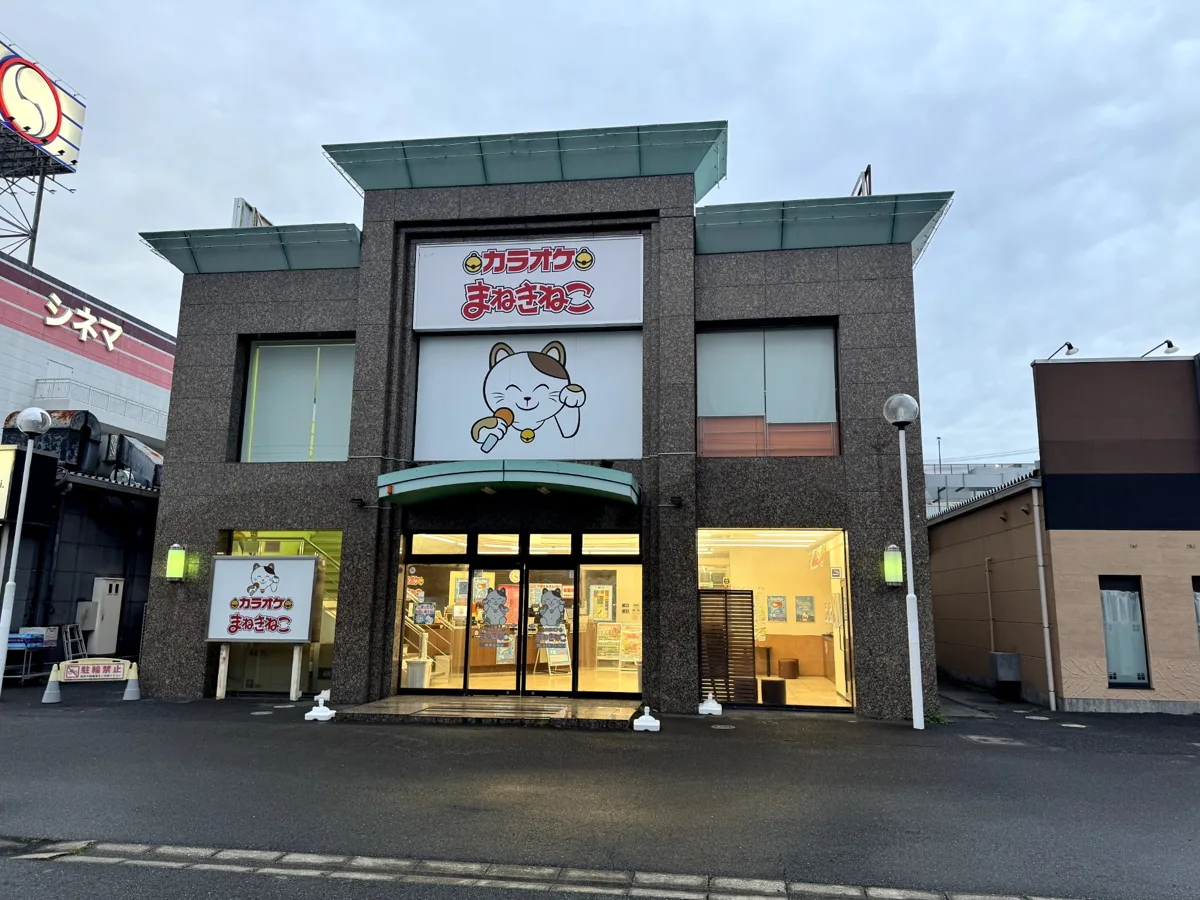
What it is
Karaoke Manekineko (カラオケまねきねこ), operated by KOSHIDAKA Holdings and recognized by its cheerful lucky-cat mascot "Maneki-kun," is Japan's largest karaoke chain with over 650 locations nationwide. While traditional karaoke chains enforce strict rules prohibiting outside refreshments, Manekineko built its nationwide popularity on a revolutionary customer-first philosophy: 100% free food and drink bring-in policy (持ち込み完全自由 - BYOF) across all branches! International travelers can pick up sushi from department store basements (depachika), hot fried chicken from convenience stores, or halal and vegan snacks and bring them straight into their private singing room. Combined with spotless non-smoking rooms, family suites, and dirt-cheap "Asa-Uta" (Morning Sing) promotions, Manekineko is the friendliest karaoke experience in Japan.
How to use
- Enter and Head to the Reception Counter: Look for the bright white-and-red sign with the waving lucky cat outside the station.
- Front Desk Check-In & Identity Verification:
- Inform the clerk how many people are in your group (Nan-nin desu).
- Japanese Entertainment Law ID Rule: Under Japanese prefectural ordinances, the group leader or registering member may be asked to present a valid government-issued photo ID. For international visitors, your passport is the standard identification to show.
- Download the free Manekineko app on your smartphone if you want member discounts, or register as a guest at the counter.
- Select Your Time Plan: Choose between 30-minute blocks (e.g., 1 or 2 hours) or Free Time (Furi-taimu) for unlimited singing during designated afternoon or overnight windows.
- Choose Drink Options: Select the "One Drink Order" system (each person orders at least one beverage from the menu) or the unlimited self-serve drink bar (Dorinku-baa).
- Head to Your Private Room: Staff will hand you a plastic binder docket with your room number. Walk down the hallway and enter your private soundproof room.
- Select Songs via Multilingual Tablet (Denmoku):
- Pick up the wireless touchscreen tablet (Denmoku).
- Tap the "Language / 言語" button on the top-right corner to switch the screen interface to English, Chinese, or Korean.
- Search millions of songs by artist name, song title, or genre. International libraries include massive selections of Western pop, rock, Disney classics, K-POP, and legendary Japanese anime soundtracks with Romanized lyrics on screen!
- Enjoy Your Own Food & Drinks (BYOF): Spread out your convenience store snacks, bento boxes, and canned drinks on the table. Manekineko provides trash bins in every room; simply be courteous and bag your trash before leaving.
- Room Extension Call: Approximately 10 minutes before your time expires, the room phone will ring. The clerk will politely ask: "10 minutes remaining. Would you like to extend?" If you are finished, say "Daijobu desu" (We are good).
- Checkout: Bring your room docket to the front counter or automatic self-checkout payment kiosk (Jidou Seisanki). Settle via credit card, transit card, or cash.
Services & options
- Morning "Asa-Uta" Session (朝うた): If you arrive between opening (often 7:00 AM or 9:00 AM) and 12:00 PM (Noon), room rates drop to an unbelievable ¥50 per 30 minutes (plus one standard drink purchase)—the cheapest indoor entertainment in Tokyo!
- Unlimited Soft Drink Bar (ドリンクバー): Bottomless Coca-Cola products, chilled Japanese oolong tea, melon soda, calpis, and soft-serve ice cream machines.
- Manekineko Party French Fries (山盛りポテトフライ): Piping hot, crispy crinkle-cut fries served in giant shareable baskets.
- Takoyaki & Karaage Combo (たこ焼き・唐揚げ): Golden-fried Japanese soul foods delivered directly to your room door if you prefer hot kitchen snacks.
Payment & practical info
Prices and details checked: November 2026.
- Accepted Payment Methods: Visa, Mastercard, JCB, American Express, Diners Club, Suica/PASMO/ICOCA, iD, QUICPay, PayPay, Rakuten Pay, d-Barai, au PAY, and cash.
- Tax-Free Status: Not eligible for tax-free shopping (免税対象外). Entertainment facility fees and karaoke room rentals are classified as domestic service consumption under Japanese tax law; tax exemption does not apply.
- Hours: Many major station-front stores operate 24 hours a day, while regional stores open from 9:00 AM to 5:00 AM the following morning.
- In-Room Amenities: High-speed free Wi-Fi (Manekineko_Free_Wi-Fi), air conditioning controls, and multiple AC power outlets to charge your phone while singing.
Good to know / Common mistakes
- Late-Night Curfew for Minors (Strictly Enforced): Under Japanese Youth Protection Ordinances, guests under 18 years of age are legally barred from karaoke facilities after 22:00 (10:00 PM) or 23:00 (11:00 PM), even when accompanied by adult guardians. Staff may verify ages via photo ID.
- Trash Etiquette for Outside Food: While bringing outside food is 100% permitted, leaving massive unbagged messes is poor etiquette. Use the room's trash bags to tidy up before returning your room docket.
- One-Drink System Requirement: Unless you select an all-inclusive drink bar plan, almost all Japanese karaoke chains mandate a "One Drink Order" (ワンオーダー制) per person; budget approximately ¥400–¥550 per person for your initial beverage order.
FAQ
- Q: Can foreign tourists sing without speaking Japanese?
- A: Yes! The digital tablets (Denmoku) have full English search systems, and songs feature on-screen English lyrics or phonetic Romanized Japanese (Romaji) lyrics for anime tracks.
- Q: Can I use Manekineko as a cheap overnight rest stop?
- A: Many budget backpackers book the "Overnight Free Time" block (midnight to 5:00 AM). The private rooms have comfortable padded booth sofas, air conditioning, and power outlets for less than a hotel room!
- Q: Do I have to make a reservation in advance?
- A: Walk-ins are welcomed 24/7. However, Friday and Saturday nights from 9:00 PM to midnight are peak party hours; arriving slightly earlier or reserving via their website guarantees immediate entry.
Sources
- Karaoke Manekineko Official Website (Verified: 2026-11-07)
- Karaoke Manekineko Shop Directory & 24H Locations (Verified: 2026-11-07)
- Karaoke Manekineko Rates & BYOF Policy Guidelines (Verified: 2026-11-07)