
Family Dining · Practical guide
Watts 100-Yen
Supermarket Convenience, Travel Basics & Shopping Tips
Prices, ordering steps, payment details, and common mistakes — in one place.
Quick Facts
| Category | Detail |
|---|---|
| Japanese name | ワッツ (Watts) |
| Brand Name | Watts / ワッツ (株式会社ワッツ / WATTS Co.,Ltd.) |
| Store Type | Community-connected 100-yen store, residential grocery-adjacent shop & practical lifestyle sundries retailer |
| Target Audience | Travelers seeking emergency travel toiletries, umbrella replacements, charging cables, laundry supplies, and practical Japanese home goods |
| Ordering Style | Compact, straightforward self-service grocery-style browsing with shared supermarket or dedicated cashier checkouts |
| Membership Required? | No membership or Japanese resident ID required for general shopping |
| Approximate Price Range | Baseline price is ¥100 per item (¥110 tax-included); upgraded items from the Tokino:ne lifestyle line carry clear price tags of ¥200, ¥300, ¥500, or ¥1,000 (as of November 9, 2026; subject to revision); Tax-free participation and the registration procedure must be confirmed at the specific shop; neither street-shop nor mall format proves eligibility |
| Multilingual Support | Basic English product classifications on packaging; store navigation is straightforward and visual; customer service is primarily in Japanese at residential branches |
| Payment Methods | Cash (JPY), International Credit Cards (Visa, Mastercard, JCB, American Express, etc.), Transit IC (Suica, Pasmo, ICOCA), e-Money, QR Mobile Pay (PayPay, d-Barai, Rakuten Pay, etc.; payment methods follow parent supermarket systems in grocery-embedded stores) |
| Store Network | Approximately 1,931 domestic retail locations across Japan (including Watts, Watts with, meets., and silk formats, as of September 2026, per company releases), heavily integrated directly adjacent to residential supermarkets and regional train stations across Japan |
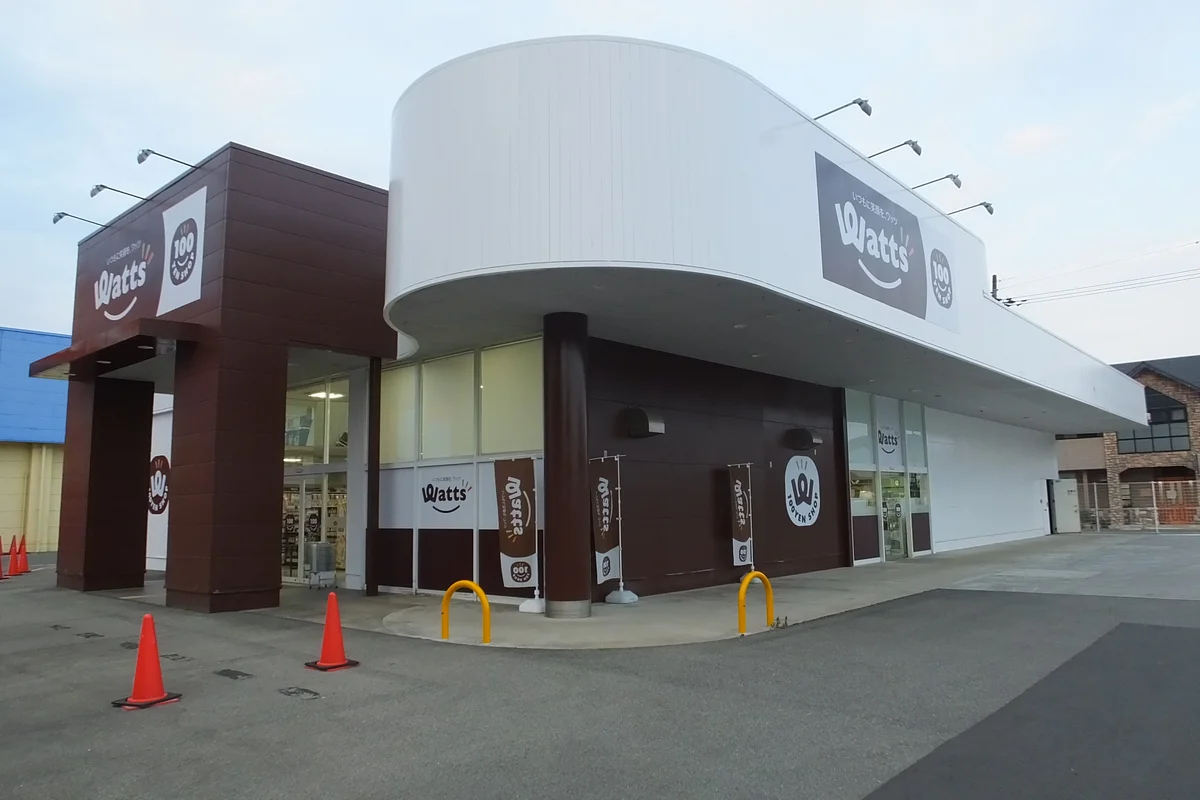
What it is
Watts (株式会社ワッツ)—operating under its community-focused slogan "Bringing Smiles to Every Day" (いつもに笑顔を、ワッツ。)—is one of Japan's most ubiquitous community 100-yen store networks. Founded in Osaka in 1995, Watts pursued a specialized retail strategy distinct from mega-destination tourist stores. Rather than opening colossal multi-story tourist flagships, Watts focused on building deep, convenient partnerships with Japanese neighborhood supermarkets, housing estates, and suburban transit lines under various brand formats including Watts, Watts with (supermarket shop-in-shops), meets., and silk.
For international visitors traveling off the beaten path—staying in residential Airbnb apartments, renting campervans, or exploring regional Japanese towns—Watts is an invaluable, authentic neighborhood lifeline. If you suddenly need laundry detergent pods for your apartment washing machine, an extra smartphone charging cable, a sturdy umbrella during an unexpected downpour, travel shampoo bottles, or disposable cutlery for a picnic in the park, Watts provides these daily necessities at everyday 100-yen pricing right next to local fresh food markets.
How to order
Step 1: Locating Neighborhood & Supermarket Branches
- Watts stores are frequently situated inside or directly beside local Japanese supermarkets (such as Life, Daiei, or local agricultural co-ops).
- You can often shop for fresh Japanese groceries and pick up household sundries in one single visit.
- Take a compact shopping basket near the entrance.
Step 2: Browsing Practical Household & Travel Aisles
- Travel & Personal Care: Travel toothbrush cases, mini liquid bottles, nail clippers, cotton swabs, wet wipes.
- Cleaning & Laundry: Laundry nets (mesh washing bags), clothespins, mini detergents, microfiber towels.
- Kitchen & Food Storage: Ziploc-style freezer bags, plastic food containers, dish sponges, chopsticks.
- Tokino:ne Lifestyle Corner: Watts' upgraded private brand featuring aesthetic muted-color kitchenware and storage bins.
Step 3: Understanding Price Tags
- Standard Products: Any item without a specific price sticker costs exactly ¥100 (¥110 with tax).
- Tokino:ne & Higher-Value Items: Upgraded lifestyle goods display clear price tags of ¥200, ¥300, ¥500, or ¥1,000 on the front label.
Step 4: Checkout & Payment Process
- In standalone Watts branches, pay at the dedicated Watts cashier counter or automated register.
- In supermarket-embedded stores (Watts with), take your basket to the main supermarket checkout lanes, where your 100-yen goods are rung up together with your food and beverage purchases.
- Pay using cash, international credit cards, transit IC cards, or mobile QR pay.
Step 5: Tax-Free Policy Notice
- Confirm tax-free participation at the specific store: Watts stores can operate in stand-alone, supermarket and shopping-center formats. The store format alone does not establish whether the retailer or a designated joint counter is authorized to register your purchase.
- Tax-free participation must be confirmed for the individual shop and any authorized counter serving it; do not infer eligibility or ineligibility solely from the store format.
- In locations where tax-free shopping is supported, Japan's airport refund tax-free mechanism (enacted November 1, 2026) applies:
- Pay the tax-inclusive price at checkout.
- The participating retailer verifies your eligibility and registers the tax-free purchase electronically in the National Tax Agency’s system, directly or through an approved provider. Follow the shop’s passport or supported Visit Japan Web procedure.
- At departure (within 90 days of purchase, and BEFORE checking your baggage with your airline), present your passport at a tax-free procedure terminal for export confirmation. Keep all purchased tax-free goods available; show them at the customs inspection area only if a red result requires it.
- The tax refund is executed by the merchant where purchased or its designated refund operator, using the method registered at the time of purchase. At some airports, participating purchases may qualify for cash collection at a designated refund terminal; check the availability and registered refund method with the seller.
What to order first
1. Fine Mesh Travel Laundry Washing Nets (洗濯ネット)
- Japanese Name: 洗濯ネット (ドラム式対応・クッションメッシュ)
- Price: ~¥110 (tax-included as of November 9, 2026; subject to revision)
- Why It Is Essential: Japan makes the best laundry wash bags in the world. Watts offers thick, dual-layer honeycomb mesh laundry bags with zipper-protecting elastic covers. They protect delicate clothing, woolens, and undergarments from snagging in coin-laundromats and hotel washing machines during long vacations, and double as breathable luggage packing organizers.
2. Tokino:ne Ceramic Tableware & Kitchen Storage Jars
- Japanese Name: Tokino:ne (ときのね) 陶器食器 / ガラスキャニスター
- Price: ~¥110–¥330 (tax-included as of November 9, 2026; subject to revision)
- Why It Is Essential: "Tokino:ne" is Watts' signature lifestyle brand designed around gentle, natural living. Featuring earthy ceramic soup mugs, wooden salt cellars, and airtight glass spice jars, they offer refined, cozy homeware aesthetics at nominal prices.
3. Clear Vinyl Heavy-Duty Travel Umbrellas (55cm–65cm)
- Japanese Name: ビニール傘 (ワンタッチジャンプ式)
- Price: ~¥110–¥440 (tax-included as of November 9, 2026; subject to revision)
- Why It Is Essential: Japan's clear vinyl umbrellas are a cultural design icon. Unlike flimsy plastic umbrellas that invert in a breeze, Watts stocks sturdy fiberglass-ribbed jump umbrellas that offer clear visibility while walking through rain-slicked city streets or historic temple grounds.
4. Compact Microfiber Hair-Drying Towel Turbans
- Japanese Name: 吸水速乾 マイクロファイバー ヘアターバン
- Price: ~¥110 (tax-included as of November 9, 2026; subject to revision)
- Why It Is Essential: Made from ultra-dense split microfiber, this elasticated hair wrap absorbs water instantly after onsen hot-spring baths or hotel showers, cutting hair-drying time by half. It is featherweight, folds flat, and is an essential travel amenity.
5. Multi-Compartment Cable & Gadget Travel Organizers
- Japanese Name: ガジェットポーチ / ケーブルクリップ (配線整理)
- Price: ~¥110–¥220 (tax-included as of November 9, 2026; subject to revision)
- Why It Is Essential: Keep your phone chargers, power bank cables, and camera memory cards tidy. Watts stocks padded neoprene zipper pouches, silicone magnetic cable ties, and desktop cord organizers that prevent tangling inside your daypack.
Payment & practical info
- Accepted Payment Modes: Cash (JPY), major global credit cards (Visa, Mastercard, JCB, American Express, etc.), transit IC cards (Suica, Pasmo, ICOCA), e-money, and mobile QR codes (PayPay, d-Barai, Rakuten Pay, etc.; payment methods follow parent supermarket systems in grocery-embedded stores).
- Tax-Free Notice: Availability must be confirmed for the specific Watts branch or a designated joint counter; supermarket or street-shop format alone is not decisive.
- Operating Hours: Supermarket-embedded stores typically operate from 09:00 or 10:00 to 20:00 or 21:00, aligned with the parent grocery store's operating schedule (hours vary by store).
- Convenience Factor: Perfect for purchasing low-cost daily amenities during extended hotel or apartment stays in Japan.
- Promotional Discounts: Promotional discount campaigns or digital payment rebates may be offered through specific seasonal promotions or supermarket loyalty programs. Check local store signage for details.
Good to know / Common mistakes
1. Check the Specific Store’s Tax-Free Status
Do not expect to do tax-free shopping at a neighborhood Watts next to your Airbnb. The store is designed for local Japanese residential life. The savings from buying goods for ¥110 are already so massive that tax-free processing is generally unnecessary for small emergency travel purchases.
2. Embedded Supermarket Checkouts
In many Watts with locations, there is no separate register counter for the 100-yen shop. You simply select your items from the Watts aisles, place them in your supermarket cart alongside your milk, fruits, and snacks, and pay for everything together at the supermarket cashier.
3. Shopping Bags
Like all retail stores in Japan, plastic bags carry a small charge (typically ¥2 to ¥5). Keep a reusable cloth shopping bag with you.
FAQ
Q1: What is the difference between Watts, meets., and silk?
A: They are all part of the same corporate group operated by WATTS Co., Ltd. Over the years, Watts merged with several regional 100-yen chains. While older storefronts may still display the "meets." or "silk" names, they stock identical merchandise and share the same product lines.
Q2: Can I find basic travel toiletries at Watts?
A: Watts sells travel and household supplies, but selection and stock vary by branch. Check the shop if you need a particular toothbrush, toiletry, cable or repair item.
Q3: How does the tax-free system enacted November 1, 2026 work if I find a participating mall branch?
A: At participating mall stores offering tax-free service, pay the tax-inclusive price and have your passport registered. Before departure from Japan (within 90 days), scan your passport at the tax-free procedure terminal before checking your baggage, with all tax-free goods in your possession. A red result requires you to show the goods at the customs inspection area. Once verified, your refund is executed back to your registered payment method by the merchant or its refund operator.
Sources
- WATTS Co.,Ltd. Official Corporate Portal (Verified: 2026-11-09)
- Watts Store Locator & Network (Verified: 2026-11-09)
- Japan Customs Departure Tax-Free Regulations (Verified: 2026-11-09)