
Family Dining · Practical guide
Yuzawaya
The Inbound Traveler's Guide to Japan's Mega Handicraft Emporium, Kimono Fabrics & Cosplay Supplies
Prices, ordering steps, payment details, and common mistakes — in one place.
Quick Facts
| Category | Detail |
|---|---|
| Japanese name | ユザワヤ (Yuzawaya) |
| Brand Name | Yuzawaya / ユザワヤ (ユザワヤ商事株式会社 / Yuzawaya Shoji Co., Ltd.) |
| Store Type | Mega handicraft department store, textile distributor & comprehensive DIY hobby materials chain |
| Target Audience | Quilters, sewists, anime cosplayers, fashion design students, doll crafters, and international travelers seeking authentic Japanese kimono fabrics and precision haberdashery |
| Ordering Style | Open-shelf browsing with specialized fabric cutting service counters (cut by the meter) and centralized checkout registers |
| Membership Required? | Membership is not required for ordinary purchases. A Yuzawaya Tomonokai membership may offer separate discounts; tourist tax-free purchase registration requires an authorized participating branch and eligible visitor, not mere chain membership. |
| Approximate Price Range | Thread, fabrics, knitting yarn, hand tools and sewing machines vary substantially by brand, material and branch. Prices per meter and availability depend on the shelf label; tax-free availability has been listed for the Namba Parks 5F branch but must be reconfirmed at purchase. |
| Multilingual Support | Branches publish basic store information online; English cutting instructions and multilingual staff at specific counters have not been established for all stores. |
| Payment Methods | Cash, credit cards and other branch-accepted electronic payments; available IC cards and wallet brands vary by outlet and cannot be guaranteed chainwide. |
| Store Network | Yuzawaya has stores across Japan including the Kamata flagship complex, Kirarina Keio Kichijoji and Namba Parks in Osaka. The figure of 74 stores was not corroborated by a dated company announcement; use the live official store locator for the current count and addresses. |
What it is
Established in 1954 (Showa 29) in Kamata, Tokyo, Yuzawaya (ユザワヤ商事株式会社) began as a modest neighborhood knitting yarn shop. Over seven decades, it has evolved into Japan's undisputed titan of handicraft materials. For anyone passionate about sewing, textile design, or handmade creativity, Yuzawaya is legendary.
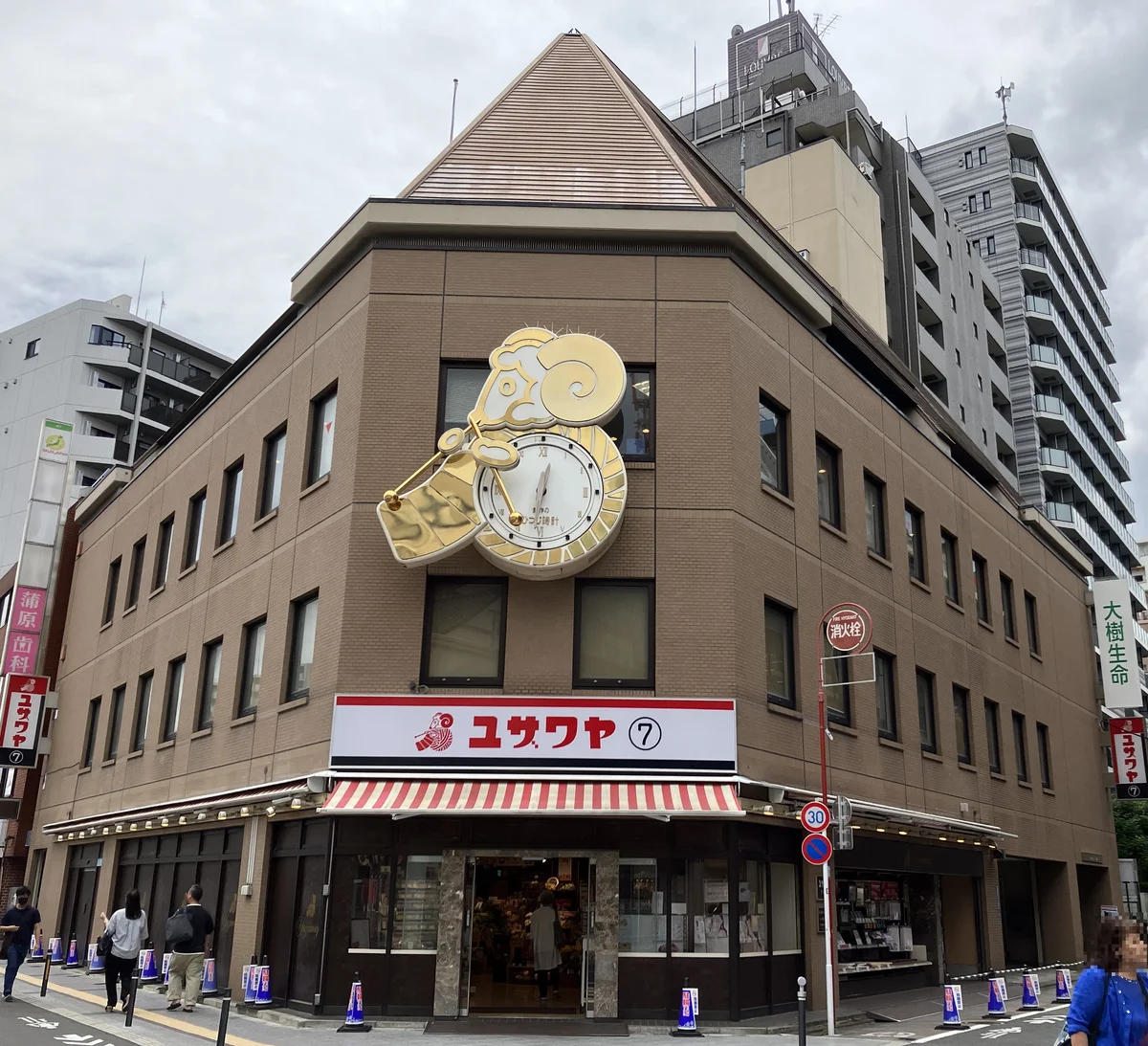
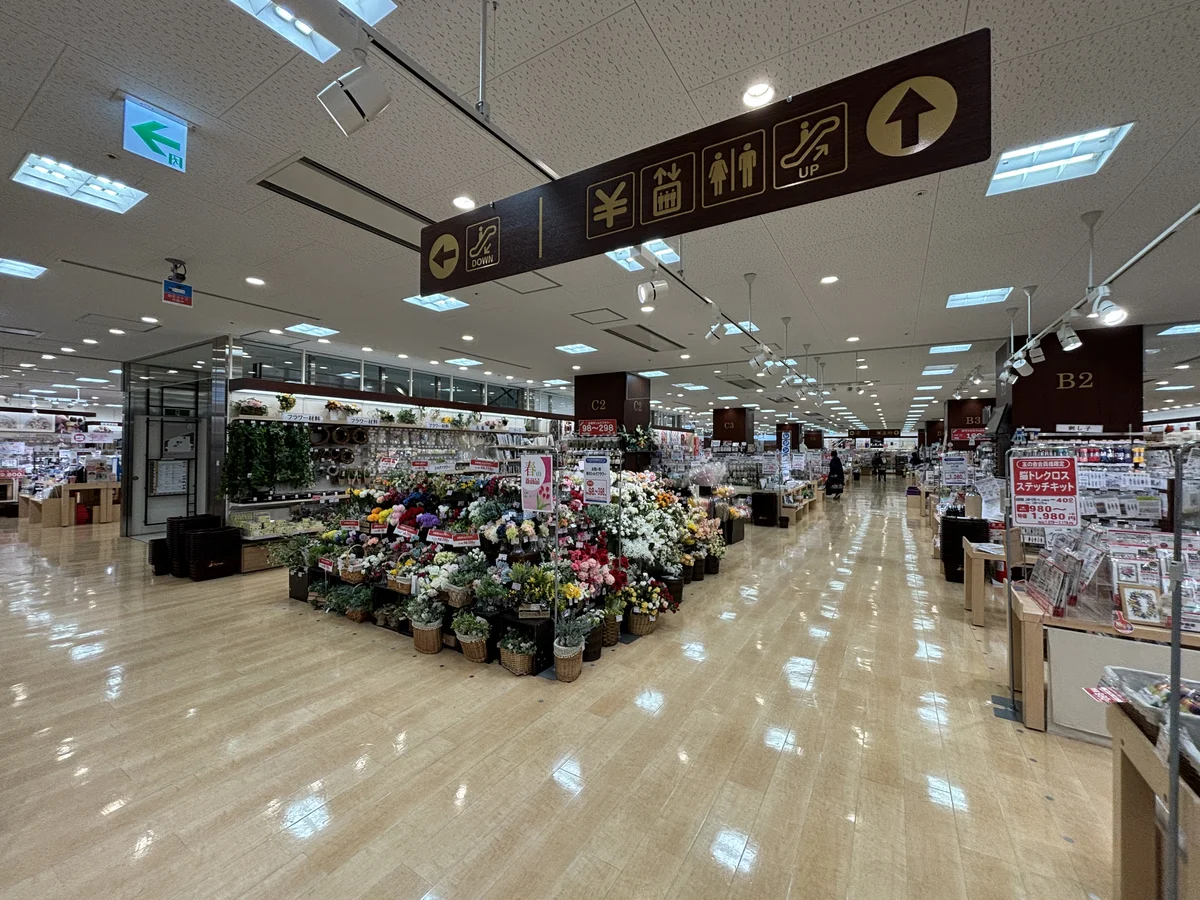
At the Kamata flagship, Yuzawaya operates three specialist retail buildings (Nos. 5, 6 and 7) near JR Kamata Station. Other current branches include Kirarina Keio Kichijoji and Namba Parks, Osaka (5F). The chain sells fabrics, Chirimen crepe and other traditional Japanese-patterned materials, sewing notions, yarn, Miyuki beads and cosplay-making supplies, with selection differing by location. Consult the official store list rather than travelling to the former Ginza Core center or assuming a particular fabric or tool is always stocked.
How to order
Step 1: Locating the Right Branch Format
Yuzawaya operates several store formats across Japan:
- The Kamata Mega Flagship (Tokyo): Multiple multi-story buildings directly adjacent to JR Kamata Station (Building No. 5, No. 6, No. 7). This is the mother lode for serious quilters, costumers, and textile enthusiasts.
- Major Shopping-Mall Branches: Current examples include Namba Parks in Osaka (5F) and Kirarina Keio Kichijoji in Tokyo. The former Ginza Core center is closed, while Kichijoji Marui and Yokohama Bay Quarter should not be presented as confirmed current Yuzawaya stores.
- Operating hours generally span from 10:00 AM to 8:00 PM or 9:00 PM (varies by store).
Step 2: Ordering Fabric by the Meter at the Cutting Counter
- Browse the fabric aisles. When you find a bolt you wish to purchase, pick up the entire fabric bolt.
- Carry your chosen bolt(s) to the Fabric Cutting Counter (生地カット台).
- Tell the cutting counter the length you need in meters or centimeters, for example “ichi meetoru” for one meter. Ask which minimum length and increments apply to that exact bolt instead of assuming all fabrics are sold in 10-centimeter steps.
- The staff measures the textile precisely along marked yardage rulers, cuts the fabric, and attaches an itemized barcode measurement slip to the folded cloth.
Step 3: Selecting Japanese Haberdashery & Tools
- Browse the tool aisles for world-renowned Japanese sewing notions. Look for Clover rotary cutters and seam rippers, Tulip Hiroshima embroidery and quilting needles, and hand-forged Shozaburo tailoring scissors.
- Pick up pre-cut fat quarters of traditional Japanese fabrics (Sashiko indigo cloths, Chirimen prints) displayed in plastic sleeves if you prefer ready-to-pack quilt squares without waiting at the cutting counter.
Step 4: Checkout & Tax-Free Refund Procedure
- Bring your folded fabric bundles, notions, and barcode slips to the checkout registers.
- Verified branch example: Yuzawaya at Namba Parks, Osaka (5F), appears on the shopping center’s current tax-free store list. Other Yuzawaya locations must be verified individually. The mall’s separate older procedural guidance still uses abolished categories; use Japan’s post-November-2026 refund rules described below instead.
- Inform the cashier: "Tax-Free kudasai" and present your original physical foreign passport (Temporary Visitor status required).
- Under Japan's airport refund tax-free mechanism (enacted November 1, 2026):
- Pay the full tax-inclusive price. Confirm that the particular outlet is an authorized tax-free shop and that your purchase is eligible.
- Only if this specific branch is an authorized tax-free shop, ask staff to register your eligible passport and purchase electronically. A chain name or shopping-mall location does not itself guarantee enrollment.
- Eligible purchase and export: Since November 1, 2026, the former separate statutory categories of “general goods” and “consumables” no longer apply. At an authorized tax-free shop, an eligible visitor must spend at least ¥5,000 excluding tax in total at the same shop on the same day. Eligible goods covered by the purchase record must be taken out of Japan, not consumed or used up in Japan.
- 90-Day Customs Verification: Complete Japan Customs departure verification within 90 days after purchase. Use the required passport and electronic customs procedure; Customs may request an inspection of the goods. Where a check is needed for goods packed in checked baggage, do it before surrendering the bag.
- Flight baggage safety: Art knives and other sharp blades must not be brought into the aircraft cabin. Ordinary permitted nonflammable inks or paints are subject to cabin liquid limits, but flammable paints, thinners, marker refills and some adhesives may be prohibited in both cabin and checked baggage. Check the actual product, SDS, airline and airport rules; complete any required Customs inspection before checking baggage.
- Refund Execution: After Customs confirms export, the authorized retailer or its designated refund provider returns the applicable tax by the registered refund method. Customs does not pay the refund at the airport. The former immediate point-of-sale exemption and special consumable packaging procedures do not apply to purchases under the new system.
What to order first
1. Traditional Japanese Kimono Fabrics & Chirimen Crepe
- What it is: Authentic woven cottons and textured rayon crepe featuring classic Japanese motifs (cherry blossoms, wave patterns, cranes, fireworks).
- Why buy it: Exceptional tactile texture and vibrant colorfast printing; ideal for making dresses, quilting, tote bags, and hair ornaments.
- Price expectation: Approximately ¥800 to ¥2,800 per meter.
2. Shozaburo Hand-Forged Tailor Shears (庄三郎 はさみ)
- What it is: Japanese tailor’s shears sold under the Shozaburo brand; consult each manufacturer/model listing for steel grade and manufacturing method instead of assuming every pair is hand-forged by a Tokyo blacksmith.
- Why buy it: Renowned globally among fashion ateliers for effortless, razor-sharp cutting through heavy denim, silk, and multi-layer wools.
- Price expectation: Approximately ¥7,500 to ¥18,000 per pair.
3. Tulip Hiroshima Craft & Embroidery Needles (チューリップ広島針)
- What it is: Premium sewing and embroidery needles manufactured in Hiroshima Prefecture using proprietary polishing and nickel-plating technology.
- Why buy it: Glides through dense fabrics without snagging or warping; packaged in charming vintage glass vials with cork stoppers.
- Price expectation: Approximately ¥650 to ¥1,200 per vial.
4. Sashiko Indigo Cloth & Variegated Cotton Threads (刺し子)
- What it is: Pre-printed indigo cotton panels featuring traditional geometric Sashiko reinforcement stitching patterns, accompanied by matte cotton threads.
- Why buy it: A portable, relaxing traditional Japanese hand-stitching craft that yields beautiful coasters, placemats, and decorative cloths.
- Price expectation: Pre-printed cloth squares ~¥450–¥750; thread skeins ~¥180–¥320.
5. Specialty Cosplay & Costume Materials
- What it is: Costume-making materials such as EVA foam, stretch fabric, faux fur and wig supplies; Worbla and particular specialty sheets are branch- and stock-dependent.
- Why buy it: Tokyo's premier one-stop resource for costume builders; immense color variety and professional theatrical durability.
- Price expectation: Foam sheets ~¥380–¥1,500; specialty textiles ~¥1,200–¥4,500 per meter.
Payment & practical info
- Accepted Payment Modes: Check the chosen Yuzawaya outlet for supported international credit cards, IC cards and QR wallets. Available forms may differ between the Kamata buildings and shopping-mall branches.
- Tax-Free Refund Rules (from November 1, 2026; authorized branches only):
- For eligible visitors at an individually authorized branch, the minimum is ¥5,000 excluding tax in aggregate at the same shop on the same day. Check that branch’s current participation before relying on a refund.
- Pay the full tax-inclusive price; if the branch participates, have the purchase electronically registered. Complete Customs export verification within 90 days; for checked goods that need inspection, do this before baggage drop. The seller/refund provider returns the tax by the method registered at purchase.
- All goods covered by a registered tax-free purchase must be exported; items used or consumed in Japan do not qualify for a refund. The former “general goods” and “consumables” statutory classifications no longer apply. Customs can require an actual goods inspection.
- Operating Hours: Kamata store 10:00 AM–8:00 PM; Namba Parks branch 11:00 AM–9:00 PM, subject to facility closure days. Other branches have their own hours.
Good to know / Common mistakes
1. Aviation Security Rules on Sharp Tools, Dyes and Adhesives
Tailor scissors, rotary cutters and other sharp blades are not allowed in cabin baggage and normally must be transported as airline-permitted checked items. Some fabric glues, solvents, dyes and aerosol craft products may be flammable or otherwise prohibited in both cabin and checked bags; a 100-ml liquid rule does not grant checked-baggage permission. Confirm the exact product and airline regulations. If Customs needs to inspect checked tax-free items, arrange that before check-in.
2. Fabric Cut Minimums & Barcode Slips
For fabric sold by length, ask the staff about the minimum purchase length, increments, price per unit and cutting counter procedure. Some bolts or pre-cut packs have different conditions; retain the labeled sales slip issued for your selected fabric.
3. Promotional Discount Coupons
Promotional discount coupons may be distributed during specific promotional campaigns or seasonal craft fairs. Terms, validity periods, exclusions, and minimum purchase conditions apply. Check customer service desks for current local flyers.
FAQ
Q1: Is fabric sold in yards or meters at Yuzawaya?
Many Yuzawaya fabric rolls are sold by metric length (meters or units of centimeters), but minimum cut lengths and sale units depend on the fabric. Confirm the shelf label or cutting counter; one meter is approximately 39.37 inches.
Q2: Can Yuzawaya ship fabric internationally to my home country?
Delivery options differ between Yuzawaya’s retail shops and online channels and are not confirmed here for every branch. Ask the shop about shipping before purchase; if carrying the goods yourself, check airline baggage limits, and if using a courier, confirm acceptance of the exact materials.
Q3: How do I receive my consumption tax refund under the 2026 airport customs system?
If the particular branch is an authorized tax-free shop and your purchase qualifies, pay the tax-inclusive price and have your passport and purchase recorded there. Within 90 days, complete Japan Customs departure verification (before baggage drop if Customs inspection of checked goods is needed). The retailer or refund provider, not Customs, refunds the tax using the method registered at purchase. Verify branch participation before buying.
Sources
- Yuzawaya Shoji Co., Ltd. Official Corporate Portal (Verified: 2026-11-12)
- Yuzawaya Store Directory & Kamata Flagship Information (Verified: 2026-11-12)
- Japan Customs Departure Tax-Free Regulations (Verified: 2026-11-12)